Green Technology in 2025: Why Storage, Hydrogen, and Low-Carbon Construction Are Reshaping the Energy Transition
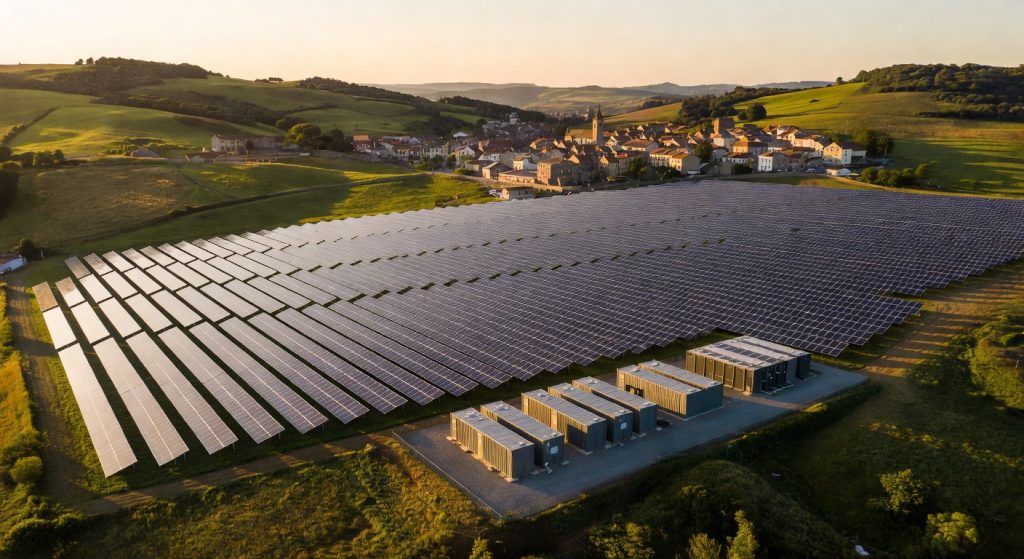
The energy transition is no longer a distant promise — it is a capital allocation decision being made right now in boardrooms, grid control centres, and construction sites across the world. The latest signals from global cleantech markets confirm that green technology investment is maturing, shifting from early-stage experimentation toward large-scale deployment. For European citizens, businesses, and policymakers, the implications are significant and immediate.
Storage Is Becoming the Backbone of the Clean Grid
If solar panels were the defining green innovation of the 2010s, energy storage is shaping up to be the defining infrastructure of the 2020s. According to recent industry reporting, long-duration energy storage installations are expected to more than double in 2025 compared to 2024 — a dramatic acceleration that reflects growing urgency around grid reliability and renewable integration.
Battery storage, particularly paired with utility-scale solar, is already attracting the largest share of cleantech capital. But investors are also looking beyond lithium-ion. Technologies capable of storing energy for 8, 12, or even 24+ hours — from iron-air batteries to compressed air systems — are moving from pilot projects toward commercial deployment. For Europe, where wind and solar generation can be highly intermittent, this shift is critical. A more storage-rich grid means fewer blackout risks, lower peak electricity prices, and a faster exit from fossil fuel backup generation.
The business case is equally compelling. Companies that secure long-term renewable energy through corporate power purchase agreements (PPAs) backed by storage are locking in predictable energy costs — a strategic advantage in an era of volatile fossil fuel markets. Clean electricity supply is becoming a core business strategy, not a niche sustainability gesture.
Hydrogen and Industrial Decarbonization Enter the Deployment Phase
While batteries address the electricity sector, clean hydrogen is emerging as a key solution for harder-to-abate industries — steel, chemicals, heavy transport, and long-haul shipping. Large corporate and financial investors continue to back hydrogen projects, alongside battery recycling platforms and AI-based energy management systems, signalling confidence that these technologies are approaching commercial viability.
Europe is particularly well-positioned here. The EU’s Hydrogen Strategy and the REPowerEU plan have created a policy framework that is attracting both public and private funding. Green innovation hubs in Germany, the Netherlands, Spain, and Scandinavia are already piloting hydrogen supply chains that could scale significantly by the end of the decade.
Equally noteworthy is the emergence of low-carbon construction materials. Carbonated aggregates and CO₂-injected concrete — which permanently store carbon dioxide within the building material itself — are moving from concept to real-world deployment. Given that the construction sector accounts for roughly 11% of global CO₂ emissions from embodied carbon alone, this is not a marginal development. It represents a new market frontier for European construction firms willing to invest in green innovation early.
AI, Smart Cities, and the Intelligence Layer of the Energy Transition
Cutting across all these sectors is a quieter but equally important trend: the application of artificial intelligence to energy optimisation. AI-enabled platforms are being used to forecast grid demand, manage distributed energy resources, optimise electric mobility charging networks, and reduce energy waste in smart cities. Precision agriculture — using sensors, data analytics, and automation to cut water and fertiliser use — is also attracting cleantech investment as the food system faces its own decarbonisation pressure.
For European smart cities pursuing carbon neutrality targets, this intelligence layer is not optional — it is the connective tissue that makes decentralised, renewable-powered urban systems actually function efficiently.
What This Means for Europe
The convergence of these trends — storage, hydrogen, low-carbon materials, and AI-driven optimisation — points toward a green technology ecosystem that is increasingly integrated and self-reinforcing. Investment in one area accelerates progress in others. Cheaper storage makes more renewable capacity viable. More renewables make green hydrogen cheaper to produce. Smarter grids make electric mobility and smart cities more practical.
- For citizens: more resilient, affordable, and cleaner energy systems at home and in urban spaces.
- For businesses: new markets in cleantech manufacturing, services, and sustainable construction.
- For policymakers: a window of opportunity to anchor European industrial competitiveness in the global green economy.
Key takeaway: The energy transition has entered an execution phase. The technologies exist, the capital is moving, and the business case is proven. Europe’s challenge — and opportunity — is to deploy at speed and at scale before others set the standard.