Europe’s 2040 Climate Target Is Reshaping the Cleantech Investment Landscape
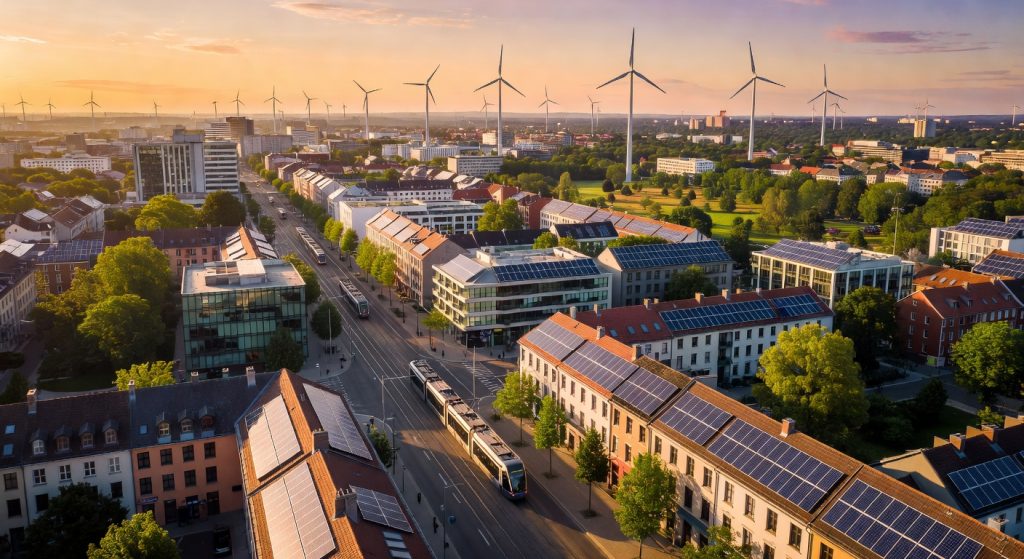
The European Union has taken one of its most consequential climate policy steps in years. With member states giving final approval to a 90% greenhouse gas emissions reduction target by 2040 — relative to 1990 levels — Europe has sent an unambiguous signal to markets, industries, and innovators: the energy transition is not slowing down. For the green technology sector, this is less a distant policy goal and more an immediate investment mandate.
Why the 2040 Target Is a Turning Point for Green Innovation
Climate targets only move markets when they come with regulatory teeth and timeline clarity. The EU’s 2040 goal does both. Sitting between the existing 2030 target of at least 55% net emissions reduction and the 2050 net-zero commitment, the new benchmark creates a legally reinforced pathway that businesses and investors can actually plan around.
For the cleantech sector, this translates into accelerated demand across multiple verticals. Long-duration energy storage — already attracting significant venture and infrastructure capital — becomes even more critical as grids absorb higher shares of intermittent renewables. Low-carbon construction materials, carbon capture technologies, and green hydrogen transport infrastructure are all positioned to benefit from stricter compliance expectations flowing from the 2040 framework.
According to industry analysts and cleantech media tracking investment flows, these are not speculative bets. They are increasingly the core of Europe’s industrial strategy, with public procurement, state aid frameworks, and private finance all aligning around decarbonization timelines that the 2040 target now anchors more firmly.
Industrial Decarbonization: Green Steel and the Policy Gaps That Still Matter
Not every development this week pointed in the same direction. Reuters reported that the EU has dropped plans for an emissions label for steel in its upcoming ‘Made in Europe’ legislation. The move is significant: without a clear emissions label, green steel producers lose a key tool for differentiating their product in public procurement and industrial supply chains.
This matters for green innovation because policy design shapes market incentives as much as headline targets do. Green steel — produced using hydrogen-based direct reduction or electric arc furnaces powered by renewables — is one of the most capital-intensive decarbonization challenges in heavy industry. Producers like Sweden’s SSAB and emerging projects across Germany and the Netherlands have invested heavily on the assumption that policy would reward low-carbon manufacturing with market access advantages.
The steel label decision is a reminder that even within a strong overall climate policy direction, the details of implementation can create headwinds for specific green technology pathways. Advocacy from industry groups and sustainability-focused procurement bodies is likely to intensify as the ‘Made in Europe’ law is finalized.
Grids, Cities, and Mobility: Where the Investment Is Flowing
Beyond heavy industry, the 2040 target reinforces momentum in three areas where green technology is already scaling rapidly:
- Smart grids and energy storage: As renewable penetration rises, grid flexibility becomes the critical bottleneck. Long-duration storage technologies — from iron-air batteries to compressed air systems — are attracting growing investment across Europe and globally.
- Low-carbon buildings: The built environment accounts for roughly 40% of EU energy consumption. Stricter decarbonization timelines push demand for heat pumps, building retrofits, and smart energy management systems — all core components of the smart cities agenda.
- Electric mobility: The 2040 framework reinforces the EU’s existing trajectory toward ending combustion engine vehicle sales by 2035. Electric mobility infrastructure — charging networks, vehicle-to-grid integration, and urban logistics electrification — continues to attract both public and private capital at scale.
Implications for Businesses and Decision-Makers
For companies operating in or supplying to European markets, the approved 2040 target is a compliance and strategy signal that should inform capital allocation decisions now. Sectors facing the steepest decarbonization curves — steel, cement, chemicals, aviation — will encounter tightening regulatory pressure and, increasingly, customer and investor expectations tied to science-based targets.
For innovators and startups in the energy transition space, the policy environment in Europe remains among the most supportive globally, even as political resistance continues in some member states. The combination of regulatory certainty, public funding through mechanisms like the Innovation Fund, and growing private cleantech investment creates a relatively favorable landscape for scaling new solutions.
Key takeaway: Europe’s 2040 climate target is not just a policy milestone — it is a structural signal reshaping where capital flows, which technologies scale, and which industries face the sharpest transformation pressure. For anyone involved in green technology, cleantech investment, or industrial decarbonization, the message from Brussels this week is clear: the direction is set, and the pace is accelerating.