From Solar Gigafactories to Green Ammonia: The Green Tech Breakthroughs Reshaping the Energy Transition
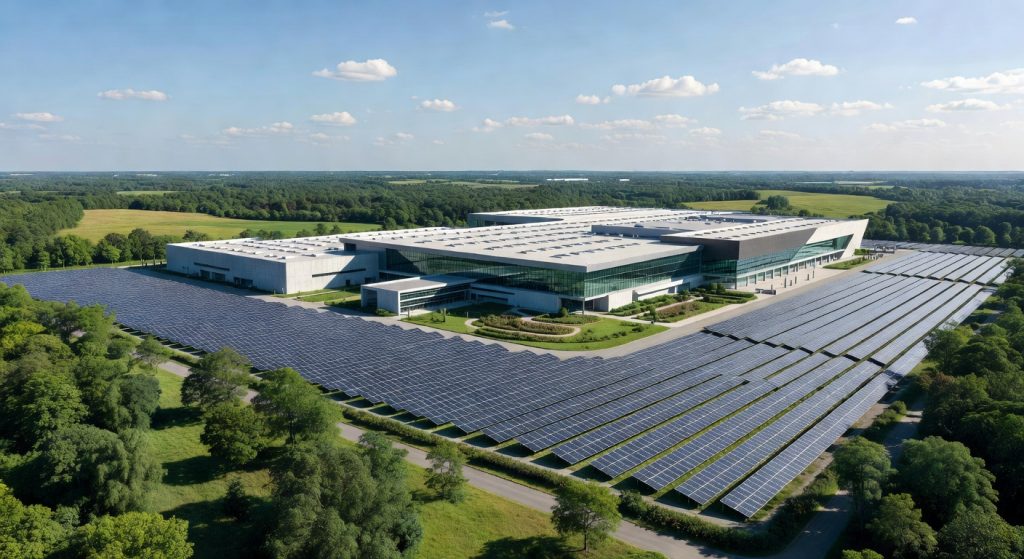
The pace of green technology development has rarely felt this urgent — or this promising. In the span of a single news cycle, a wave of announcements has landed that collectively point toward a fundamental reshaping of how the world produces energy, manages waste, and captures carbon. From a landmark solar manufacturing expansion in the United States to university-led breakthroughs in hydrogen and ammonia production, the energy transition is gaining both industrial muscle and scientific depth.
A 4-GW Solar Plant and What It Signals for Cleantech Scaling
SEG Solar’s announcement of a new 4-gigawatt solar module manufacturing facility in the United States is more than a corporate milestone — it is a signal of where the global cleantech industry is heading. At 4 GW of annual production capacity, the plant would rank among the largest solar manufacturing sites in the Western world, capable of supplying panels for millions of homes each year.
For Europe, the announcement carries a pointed lesson. The EU has been wrestling with its own solar manufacturing gap: despite leading on policy ambition through the European Green Deal and the Net-Zero Industry Act, the continent still imports the vast majority of its photovoltaic panels from Asia. The SEG Solar move — partly incentivised by the U.S. Inflation Reduction Act — illustrates how industrial policy and green innovation can combine to attract large-scale cleantech investment. Brussels is watching closely, and several European manufacturers are pushing for comparable support frameworks to keep solar supply chains closer to home.
For citizens and businesses alike, expanding domestic manufacturing capacity translates into more resilient supply chains, lower long-term module costs, and — critically — job creation in the clean economy.
Hydrogen, Ammonia, and the Science of Affordable Green Fuels
While solar dominates headlines, some of the most consequential green innovation is happening in laboratories. Two breakthroughs stand out this week for their potential to dramatically reduce the cost and complexity of producing clean fuels.
Researchers at the University of Birmingham have unveiled a low-temperature hydrogen production method that harnesses waste heat — the thermal energy routinely discarded by industrial processes, data centres, and even urban infrastructure. By recovering this otherwise lost energy, the technique could enable both centralised and localised hydrogen generation at significantly lower cost than conventional electrolysis. In the context of smart cities and decentralised energy systems, this is particularly relevant: local hydrogen production could support everything from public transport fleets to district heating networks.
Equally striking is a lightning-inspired process for synthesising ammonia directly from air. Ammonia is the backbone of global fertiliser production — and currently one of the most carbon-intensive industrial chemicals on the planet, responsible for roughly 1–2% of global CO₂ emissions. A scalable, low-emission route to green ammonia would have enormous implications not only for agriculture but also for electric mobility and shipping, where ammonia is increasingly considered a viable zero-carbon fuel.
Carbon Capture and Circular Materials: Closing the Loop
The third cluster of innovation addresses what happens to carbon and waste after they are generated — a critical frontier for any credible energy transition strategy.
Scientists have developed an innovative seawater-electrolysis process that converts dissolved CO₂ into solid, stable carbon-trapping materials. Unlike many carbon capture approaches that require storing gaseous CO₂ underground, this method produces a tangible solid product, potentially usable in construction or manufacturing — turning a climate liability into a resource. The scalability of ocean-based carbon capture could make it a meaningful tool in Europe’s decarbonisation toolkit, particularly for hard-to-abate sectors.
Meanwhile, the University of Leicester has demonstrated a soundwave-based technique for separating mixed materials — a breakthrough for sustainable recycling in smart cities and clean manufacturing. As the EU’s Circular Economy Action Plan pushes for higher recycling rates and better material recovery, acoustic separation technology could help close the gap between ambition and industrial reality.
Implications for Europe and the Path Ahead
Taken together, these developments sketch a coherent picture of where green technology is heading:
- Manufacturing scale matters: Policy-backed industrial investment is essential to translate cleantech innovation into real-world deployment.
- Decentralisation is a feature, not a bug: From local hydrogen to acoustic recycling, the next generation of green solutions is designed to work at multiple scales — including within cities.
- Carbon capture is maturing: Solid-state and ocean-based approaches are moving beyond concept, offering new options alongside renewable energy expansion.
Europe’s strength lies in its regulatory leadership and research excellence. The challenge — and the opportunity — is to convert that advantage into manufacturing capacity and market deployment before others set the pace.
Key takeaway: The energy transition is no longer a distant ambition. It is an industrial and scientific race unfolding in real time — and the innovations announced this week show that the tools to win it are already being built.