Atlantic Ocean Current Is Weakening: What It Means for Europe and the Planet
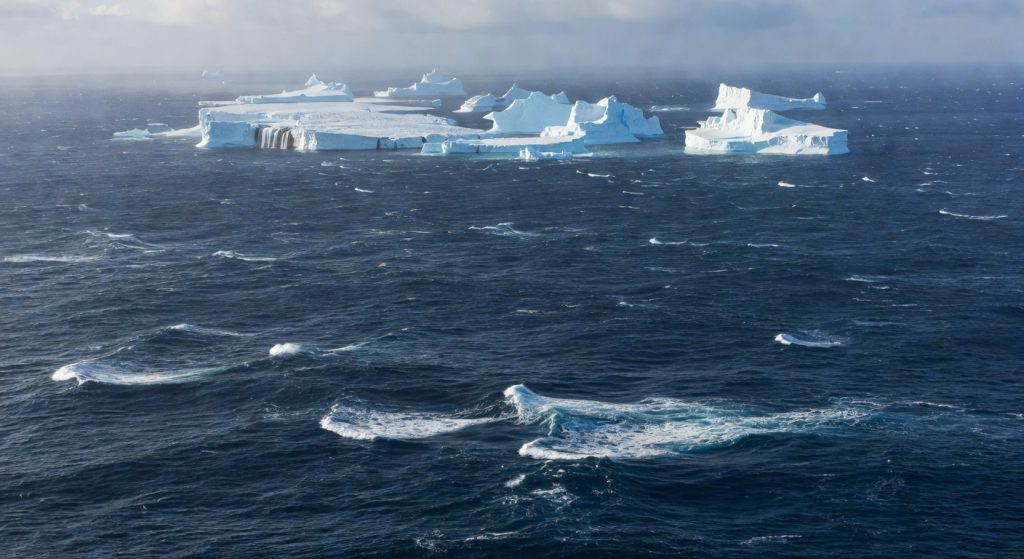
The ocean has long been Earth’s great regulator — absorbing heat, redistributing energy, and keeping climates across continents within livable bounds. But a growing body of scientific evidence now confirms what researchers have feared for years: the Atlantic Meridional Overturning Circulation (AMOC), the vast ocean current system that acts as a planetary conveyor belt, is weakening. And the consequences for Europe, and the world, could be profound.
A Circulation System Under Unprecedented Stress
AMOC works by carrying warm, salty surface water northward from the tropics toward the North Atlantic, where it cools, sinks, and flows back southward as deep, cold water. This circulation is central to climate regulation across Europe, North America, and beyond. New studies reported by ScienceDaily (May 10, 2026) now provide strong evidence that this system is weakening across a vast swath of the North Atlantic — a shift with potential worldwide effects on weather patterns, sea levels, and economies dependent on stable climates.
For Europe, the stakes are especially high. AMOC is a key reason why countries like the United Kingdom, Ireland, and Norway enjoy milder winters than their latitudes would otherwise allow. A significant slowdown could bring colder winters, disrupted rainfall patterns, and more extreme weather events — ironically, even as the planet warms overall due to climate change. Southern European nations, already grappling with record heat and drought, face a different but equally serious set of risks, including intensified heatwaves and shifting agricultural zones.
Polar Melt Is Accelerating the Crisis
The weakening of AMOC does not occur in isolation. It is deeply connected to the accelerating melt of polar ice — and here, the latest data is alarming. According to ScienceDaily (May 4, 2026), Greenland’s ice melt has surged sixfold since 1990, with the most extreme loss events concentrated in recent years. Meanwhile, Antarctica is melting from below at rates worse than previously expected, confirmed by new ship and robotic underwater surveys.
The mechanism is straightforward but devastating: as ice sheets melt, vast quantities of cold, fresh water pour into the North Atlantic, disrupting the salinity and density gradients that drive AMOC. In essence, the meltwater acts as a brake on the circulation system. This feedback loop — warming drives melting, melting weakens currents, weakened currents alter weather — is precisely the kind of climate tipping point that scientists have warned about for decades. Once triggered, such dynamics can become self-reinforcing and extremely difficult to reverse.
Adding another layer of complexity, a colossal underwater volcano eruption in 2022 released massive quantities of water vapour and formaldehyde into the atmosphere. While scientists are now exploring whether such events could offer insights into geoengineering approaches to climate intervention, the broader lesson is clear: Earth’s systems are deeply interconnected, and disruptions in one area cascade unpredictably across others.
Policy Is Falling Dangerously Short
Against this backdrop, the gap between scientific urgency and political action has never felt wider. The UNEP Emissions Gap Report 2025, published in October 2025, projects a catastrophic 2.3–2.5°C of warming even if all current Paris Agreement pledges are fully implemented. To maintain any realistic chance of limiting warming to 1.5°C, the report calls for a 55% reduction in global emissions by 2035 — a target that current national plans fall dramatically short of.
Europe has positioned itself as a global leader in environmental policy, with the European Green Deal and ambitious targets for renewable energy deployment. Yet even within the EU, progress on reducing emissions, protecting biodiversity, curbing pollution, and funding climate adaptation remains uneven. The science now demands not incremental progress, but systemic transformation.
What Needs to Happen — and Fast
The convergence of AMOC weakening, polar ice loss, and inadequate emissions policy points to a narrow but still-open window for action. Key priorities include:
- Accelerating the transition to renewable energy across all sectors, reducing dependence on fossil fuels that drive warming and ice melt.
- Strengthening international climate commitments ahead of COP31, with binding mechanisms and genuine accountability.
- Investing in climate adaptation — particularly for coastal communities and regions most exposed to sea-level rise and weather disruption.
- Protecting and restoring natural ecosystems, from forests to wetlands, which serve as critical buffers against climate extremes and support conservation of threatened species.
The bottom line: the weakening of the Atlantic Ocean current is not a distant theoretical risk — it is a measurable, ongoing process with real consequences for hundreds of millions of people. The science is clear. The question now is whether policymakers, businesses, and citizens will respond with the urgency the moment demands.