Fusion Power, Electric Buses, and Battery Breakthroughs: Green Tech’s Defining Moment
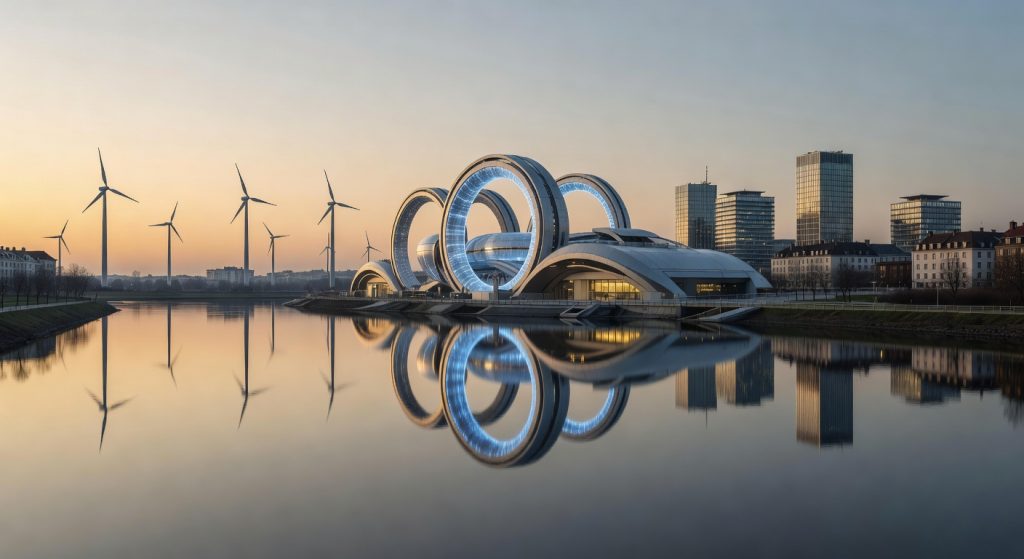
The pace of green technology development has rarely felt more urgent — or more promising. In the same week that US climate policy faces its most significant rollback in decades, a wave of cleantech breakthroughs is signalling that the energy transition is no longer a distant ambition. From nuclear fusion to electric fleets rolling through European cities, the contrast between political retreat and technological advance has never been sharper.
Nuclear Fusion Moves From Lab to Power Grid
The most headline-grabbing development comes from a transatlantic consortium with serious ambitions. Type One Energy — backed by Bill Gates — has joined forces with UK-based Tokamak Energy and engineering giant AECOM to announce plans for the UK’s first commercial nuclear fusion facility, targeting completion by the mid-2030s. If realised, this would mark a historic milestone: fusion energy, which replicates the process powering the sun, produces no carbon emissions, generates minimal radioactive waste, and runs on hydrogen isotopes available in virtually unlimited supply.
For Europe, this is more than a scientific milestone — it is a strategic opportunity. The UK’s post-Brexit identity as a hub for green innovation receives a significant boost, and the broader European cleantech ecosystem stands to benefit from supply chains, skilled jobs, and spillover research. Fusion has long been described as “always 30 years away”; this consortium is betting it is now less than ten.
Electric Mobility and Smart Cities Accelerate Across Europe
While fusion grabs the spotlight, quieter but equally consequential progress is happening on the streets of Europe’s cities. Hamburg has confirmed plans to deploy 240 electric buses by 2031, a commitment that places the German port city among the continent’s leaders in sustainable urban transport. This is not an isolated move — it reflects a continent-wide push to electrify public transport as part of broader smart cities strategies that integrate clean mobility, digital infrastructure, and reduced emissions.
For urban citizens, the benefits are tangible: cleaner air, quieter streets, and lower operating costs that can translate into more reliable and affordable public services. For policymakers and city planners, Hamburg’s roadmap offers a replicable model — one that combines long-term procurement planning with clear emissions targets aligned to EU climate goals.
On the freight side, CARB (California Air Resources Board) has officially confirmed the battery specifications of the Tesla Semi: 822 kWh for the long-range variant and 548 kWh for the standard version, both using Tesla’s advanced 4680 cylindrical cells. These figures matter for European logistics operators watching the electric trucking market closely. As battery energy density improves and costs fall, the business case for electrifying heavy goods transport strengthens — a critical piece of the energy transition puzzle that aviation and shipping alone cannot solve.
US Policy Rollbacks Cast a Shadow — But Don’t Stop the Tide
The technological optimism, however, must be weighed against a troubling policy backdrop. In the United States, two significant reversals risk undermining global climate momentum:
- The SEC is advancing the rescission of its 2024 climate disclosure rules, weakening the transparency framework that investors and sustainability professionals rely on to assess corporate climate risk.
- The EPA has moved to reverse the CO2 endangerment finding — the legal cornerstone of US federal climate regulation — a step that could fundamentally reshape American environmental governance for years to come.
For European businesses and decision-makers, these developments are not merely a US domestic affair. Global supply chains, multinational reporting standards, and international climate finance are all affected when the world’s largest historical emitter retreats from its commitments. The EU’s own Corporate Sustainability Reporting Directive (CSRD) becomes even more strategically important as a counterweight — and a potential global benchmark.
What This Means for Europe’s Green Future
The week’s developments tell a coherent story: green technology and cleantech innovation are accelerating independently of political cycles, but they need supportive policy environments to scale at the speed the climate crisis demands. Europe’s comparative advantage lies precisely in maintaining that policy consistency — through the Green Deal, clean mobility targets, and robust corporate sustainability frameworks — while investing in the frontier technologies that will define the next energy era.
Key takeaway: Fusion energy, electric urban fleets, and next-generation batteries are no longer speculative — they are funded, planned, and in some cases already on the road. The challenge for European citizens, businesses, and policymakers is to ensure the regulatory and financial architecture keeps pace with the innovation, especially as US policy retreats create both risks and openings for European leadership in the global energy transition.