From Fusion Reactors to Plastic-Fuelled Sunlight: The Green Tech Breakthroughs Reshaping Europe’s Energy Future
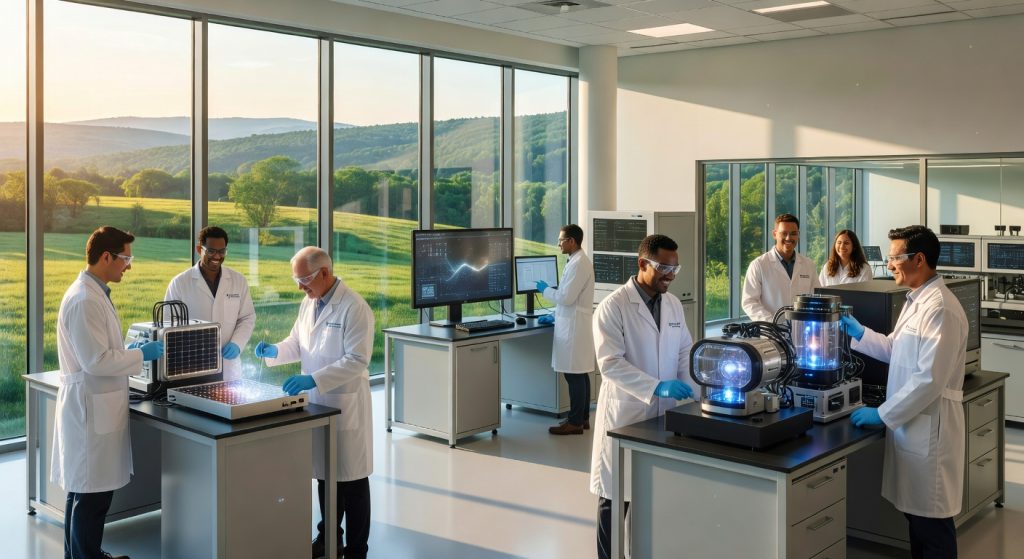
The pace of green innovation has rarely felt more urgent — or more promising. In the span of a single news cycle, announcements have emerged spanning nuclear fusion, next-generation solar technology, and a method to turn waste plastics into usable fuel using nothing but sunlight. Taken together, these developments paint a picture of an energy transition that is accelerating on multiple fronts simultaneously, with Europe at the centre of much of the action.
Nuclear Fusion Moves from Dream to Decade-Long Target
The most headline-grabbing development comes from a transatlantic consortium: Type One Energy — backed by Bill Gates — has joined forces with UK-based Tokamak Energy and engineering giant AECOM to deliver the UK’s first commercial nuclear fusion facility by the mid-2030s. That is an extraordinarily ambitious timeline for a technology that has, for decades, been described as perpetually “thirty years away.”
Fusion energy, which replicates the process powering the sun, produces no long-lived radioactive waste and emits no carbon dioxide during operation. If delivered at commercial scale, it would represent perhaps the most significant leap in clean energy history. The UK’s investment in this consortium reflects a broader European strategic bet: that being first to commercialise fusion could define energy geopolitics for the rest of the century.
This is not an isolated wager. The EU’s own EUROfusion programme and the international ITER project in France continue to channel billions into fusion research. The difference now is that private capital — and private urgency — is entering the equation, compressing timelines in ways that public research programmes rarely can.
Decentralised Innovation: Solar Indoors and Fuel from Plastic
While fusion captures the imagination, two quieter breakthroughs deserve equal attention for their near-term potential.
Researchers at the University of Queensland have made significant advances in indoor solar technology — photovoltaic cells capable of harvesting ambient artificial light to power home and office electronics. Unlike conventional rooftop solar, indoor panels don’t require direct sunlight, opening up possibilities for self-powered sensors, smart home devices, and low-energy office equipment. As smart cities and connected buildings proliferate across Europe, this technology could quietly eliminate the need for batteries or grid connections in millions of small devices.
Equally compelling is work by scientists who have demonstrated a method for converting waste plastics into valuable fuels using sunlight — a photocatalytic process that addresses two crises at once: plastic pollution and clean fuel scarcity. Europe generates over 25 million tonnes of plastic waste annually, according to Eurostat, with less than a third successfully recycled. A scalable plastic-to-fuel pathway would not only reduce landfill and ocean pollution but feed directly into the circular economy framework that the EU’s Green Deal champions.
Grid Pressure and the Road Transport Reckoning
Innovation at the generation level means little if the grid cannot handle it. Two developments this week highlight the mounting pressure on energy infrastructure. Centrica and Delta have announced fuel cell generators designed specifically to power data centres off-grid — a direct response to the explosive energy demand from AI and cloud computing that is straining national grids from Ireland to Poland. Meanwhile, a new technical standard enabling automatic device switching to stabilise electrical grids signals that smart energy management is moving from pilot projects into mainstream infrastructure planning.
On the transport side, European truckmakers are facing a pivotal moment. The EU’s first-ever CO₂ standards for heavy goods vehicles take effect in 2025, and manufacturers who delay clean transition investments risk losing market share to agile new competitors — including Chinese electric truck producers already expanding into European markets. Electric mobility for freight, long seen as the hardest sector to decarbonise, is no longer a future problem.
What This Means for Europe’s Green Transition
The convergence of these developments carries a clear message: the energy transition is no longer a linear story of wind turbines and solar farms scaling up. It is a multi-layered transformation touching fusion physics, materials science, waste management, grid architecture, and heavy industry simultaneously.
For European policymakers and businesses, the implications are significant:
- Investment diversification across both long-horizon bets (fusion) and near-term solutions (indoor solar, grid standards) is essential.
- Regulatory clarity — as seen with truck CO₂ standards — drives private sector action more reliably than subsidies alone.
- Circular economy principles are increasingly intersecting with energy policy, as plastic-to-fuel innovation demonstrates.
The key takeaway: Green innovation is no longer waiting for a single breakthrough technology. It is arriving in waves, from multiple directions at once. Europe’s challenge — and opportunity — is to build the policy frameworks, infrastructure, and industrial capacity to absorb and scale all of it, before the window of competitive advantage closes.