US Companies Keep Investing in ESG Despite Political Headwinds — What It Means for Global Sustainability
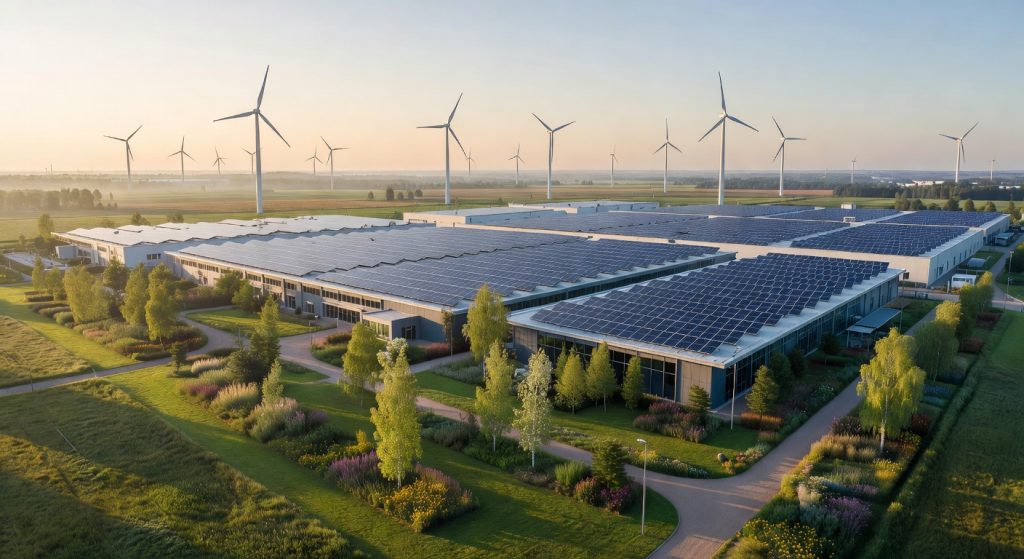
Political turbulence rarely stops a well-run business from protecting its bottom line. Despite sweeping regulatory rollbacks under the Trump administration, a growing body of evidence shows that American companies are not retreating from sustainability — they are doubling down on it, armed with artificial intelligence, IoT sensors, and a clear-eyed view of where global markets are heading. For European observers, the trend carries both reassurance and a strategic lesson.
ESG as a Business Imperative, Not Just a Political Choice
A new ISG Provider Lens Sustainability and ESG report paints a revealing picture of corporate America in 2025. US firms across asset-intensive sectors — power, utilities, manufacturing, and transportation — are embedding sustainability into their core digital transformation strategies, allocating roughly 5 to 10 percent of project costs to environmental and social initiatives. Far from being a compliance burden, these investments are generating measurable returns: cost savings through energy efficiency, stronger customer retention, and a competitive edge in talent attraction.
The driving force behind this momentum is generative AI and machine learning. When trained for specific industry use cases, these tools can dramatically streamline ESG data collection and reporting — processes that have historically been expensive, fragmented, and prone to error. IoT devices, meanwhile, are enabling real-time monitoring of emissions, water usage, and supply chain conditions, turning sustainability from an annual reporting exercise into a live operational dashboard.
Crucially, analysts quoted in the ISG report argue that mandatory ESG disclosure is inevitable — regardless of who occupies the White House. Global investors, trading partners, and regulators in Europe and Asia are setting the pace, and US multinationals simply cannot afford to be caught unprepared. From a sustainable finance perspective, companies that build robust ESG infrastructure today are positioning themselves for a regulatory environment that will tighten, not loosen, over the medium term.
Energy Sector Tensions: Wind, Solar, and the Limits of Political Interference
The energy sector offers the starkest illustration of the gap between political rhetoric and market reality. The Trump administration’s executive order to halt offshore wind development — a move that sent shockwaves through the renewables industry — has already been overturned by a federal court, allowing Danish energy giant Ørsted to restart its stalled US projects. The episode underscores a recurring pattern: policy reversals create short-term disruption, but they rarely unwind the underlying economics of clean energy.
Solar tells a more complicated story. The White House has signalled a retreat from federal solar support, and US trade pressure is creating friction that risks weakening the global sustainability agenda at a critical moment. Gold markets, interestingly, are reflecting climate anxiety — with volatility partly attributed to investor uncertainty over climate risk and resource scarcity. These are not abstract concerns; they translate directly into the kind of systemic financial risk that ESG frameworks and sustainable finance tools are designed to manage.
For Europe, which has built its green business architecture on the twin pillars of the European Green Deal and the Corporate Sustainability Reporting Directive (CSRD), the American experience is instructive. Regulatory ambition must be matched by technological capacity and corporate buy-in — and the US case shows that when businesses internalise the logic of sustainability, they tend to persist even when governments waver.
Implications for European Business and Policy
The transatlantic divergence on sustainability policy creates both risks and opportunities for European companies and policymakers. On the risk side, a weakened US commitment to international climate frameworks could slow progress on global supply chain standards and circular economy initiatives that depend on multilateral cooperation. On the opportunity side, European firms that have invested early in CSRD-compliant reporting and green technology are increasingly well-positioned to attract capital from investors who demand credible corporate responsibility credentials.
Key takeaways for European decision-makers include:
- Digital infrastructure is now central to ESG strategy — AI and IoT are not optional add-ons but core tools for competitive sustainability management.
- Regulatory convergence is coming — even US companies are preparing for mandatory ESG reporting, signalling that global standards will align over time.
- Energy policy volatility is a systemic risk — diversified clean energy portfolios and technology-neutral frameworks offer the best hedge against political uncertainty.
- Sustainability multiplies the value of digital transformation — embedding green criteria into broader technology investments amplifies returns across the business.
The clearest takeaway from the US experience in 2025 is that sustainability has moved beyond ideology. When companies integrate ESG into digital transformation not because they are told to, but because it saves money, retains customers, and future-proofs operations, the agenda becomes self-reinforcing. Europe built its green framework on regulation; the US is discovering the same destination through the market. The two paths, ultimately, are converging.