Trump Fires Noem, Nominates Mullin as Homeland Security Chief – May 3, 2026
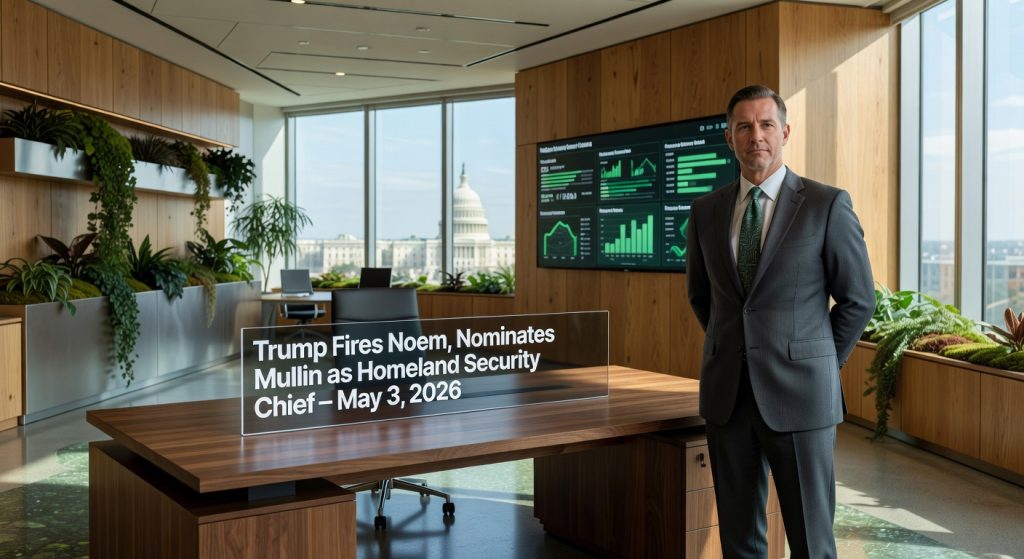
In a striking development that has captivated the corridors of power in Washington, President Donald Trump has made the bold decision to dismiss Homeland Security Secretary Kristi Noem. This unexpected move, accompanied by the nomination of Senator Markwayne Mullin from Oklahoma, signals a potential strategic shift in the administration’s approach to national security and international relations.
The Fallout from Noem’s Tenure
Announced through a Truth Social post, the dismissal of Kristi Noem took many by surprise, highlighting President Trump’s characteristic penchant for abrupt personnel changes. Noem’s time as Secretary was marred by controversies, including allegations of an inappropriate relationship with a chief advisor and questionable financial practices. Her divisive remarks about anti-ICE protesters further fueled criticism, culminating in a contentious Senate testimony that failed to clear doubts about her conduct.
Geopolitical Context and Rising Tensions
This high-profile firing unfolds against a backdrop of escalating tensions between the United States and Iran. President Trump has issued stern warnings to Tehran, suggesting the possibility of military action if provocations persist. This rhetoric has contributed to surging oil prices, exacerbating global energy market volatility amid Middle Eastern production constraints and strategic blockades in the Strait of Hormuz.
Implications for Domestic Security Policy
The leadership change at the Department of Homeland Security could significantly impact domestic security policy, particularly in immigration enforcement and border management. Noem’s hardline approach mirrored Trump’s agenda but faced operational challenges and ethical dilemmas, raising questions about its effectiveness under intense public and congressional scrutiny.
Senator Mullin’s Nomination: A New Direction?
Senator Markwayne Mullin, the nominee to replace Noem, brings a respected reputation within Republican circles and legislative experience that could ease his confirmation. His appointment may unify the party and stabilize the Department amidst heightened national security alerts due to the Iran crisis. Mullin’s challenge will be to navigate the complex landscape of homeland security while balancing the demands of a politically charged environment.
Economic and International Repercussions
The leadership transition intersects with the pressures of war-driven inflation, as rising energy costs impact American households and industries. These economic challenges prompt serious discussions within the White House regarding affordability and resilience. Internationally, this shake-up reflects Trump’s strategy of decisive personnel changes to convey strength and adaptability, essential amidst Middle Eastern hostilities and diplomatic coordination with allies like Israel and Germany.
Accountability and Future Perspectives
Noem’s ouster raises critical questions about accountability and the vetting processes for high-stakes government roles. This episode highlights the risks of intertwining personal and professional conduct, especially in positions of significant authority. As the Senate prepares to review Mullin’s credentials, this narrative captures the volatile interplay between domestic politics and global threats defining the current administration’s tenure.
In conclusion, the firing of Kristi Noem and the nomination of Markwayne Mullin underscore President Trump’s hands-on governance approach, emphasizing adaptability and a willingness to pivot when necessary. This shift could influence a range of policy areas, from counterterrorism strategies to hemispheric partnerships, as the U.S. faces a crucial test of resolve against Iran. Share your thoughts in the comments below.