EU’s 90% Emissions Cut by 2040: Ambition, Compromises, and What It Means for Businesses and Citizens
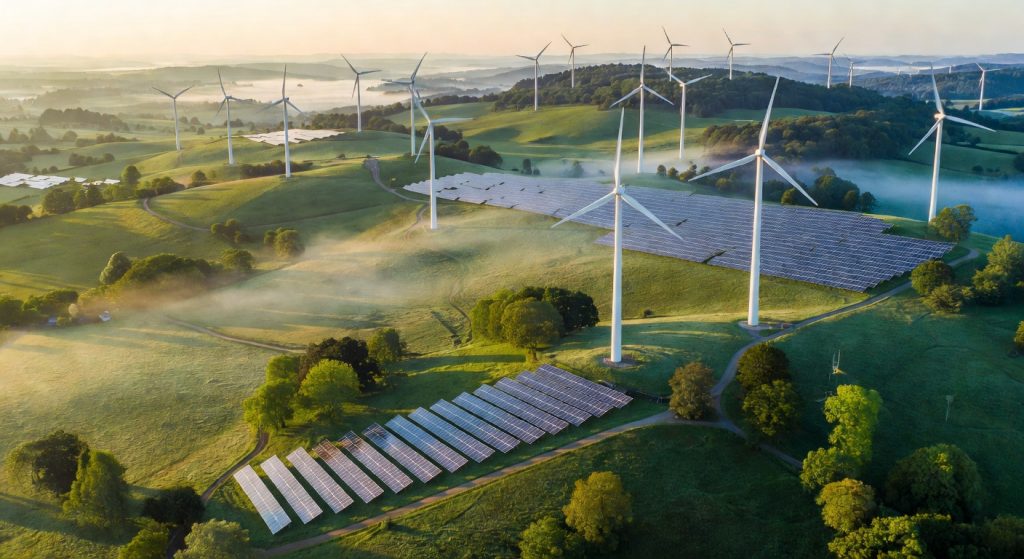
The European Union has reached a landmark agreement to cut carbon emissions by 90% by 2040 compared to 1990 levels — a target that positions Europe as a global climate leader ahead of the UN COP30 summit in Belém, Brazil. But the deal comes with significant concessions that have already sparked debate: provisions allowing the purchase of carbon credits from developing countries, and economic adjustment clauses that could soften the blow for industry. The question is whether this represents pragmatic climate diplomacy or a quiet retreat from ambition.
A Deal Built on Compromise: Carbon Credits and Economic Safeguards
The 90% target is, on paper, one of the most aggressive climate commitments ever made by a major economy. Yet the fine print matters. The inclusion of international carbon credits — allowing the EU to offset some domestic emissions by funding reductions in developing nations — has raised eyebrows among climate advocates. Critics argue this risks outsourcing the hard work of decarbonisation rather than driving structural change within Europe itself.
Economic adjustment clauses add another layer of flexibility, potentially allowing member states or sectors to slow implementation if growth conditions deteriorate significantly. Supporters frame these as necessary safeguards for a just transition; opponents see them as escape hatches that could erode the target’s credibility.
For citizens, the practical impact is nuanced. If emission reductions are partly achieved abroad through carbon credit purchases, the transformation of European energy systems, transport, and housing may proceed more slowly — with both costs and benefits spread unevenly across society.
Carbon Markets Expand — and So Does the Revenue
Alongside the 2040 target, the EU’s broader climate policy architecture is evolving rapidly. The EU Emissions Trading System (EU ETS) has been expanded to cover buildings and transport — two of the most stubborn sources of emissions in everyday life. This expansion is projected to generate over €200 billion for green transition funds, providing significant capital for infrastructure, innovation, and social support programmes.
Simultaneously, the Carbon Border Adjustment Mechanism (CBAM) is set to become fully operational by 2026. Designed to prevent carbon leakage — where production simply moves to countries with weaker environmental rules — CBAM will impose a carbon price on imports of steel, cement, aluminium, fertilisers, and electricity. For global exporters targeting the European market, this is a powerful signal: greener production is no longer optional, it is a market access requirement.
The LULUCF regulation (Land Use, Land-Use Change and Forestry) has also been revised, setting EU-wide carbon removal targets aligned with 2030 goals and placing binding national obligations on member states to manage land-use emissions. Forests, wetlands, and agricultural soils are now firmly part of the climate accounting framework.
Implementation Timelines: Businesses Get More Time, But the Direction Is Clear
Not every regulation is accelerating. The EU Deforestation Regulation (EUDR) — which requires companies to prove that commodities like soy, palm oil, cattle, coffee, cocoa, wood, and rubber have not contributed to deforestation — has seen its enforcement timeline extended. Large and medium-sized companies must comply by December 30, 2025, while micro and small enterprises have until June 30, 2026. This delay was welcomed by industry groups but criticised by environmental organisations who warn it sends the wrong signal to supply chains.
Despite these extensions, the overall momentum of the EU Green Deal remains substantial. Of the 168 initiatives proposed under the Green Deal framework by January 2025, 98 have been adopted and 37 are still under negotiation. Only 5 have been withdrawn — a remarkably low attrition rate given the political turbulence of recent years, including pressures from agricultural and energy sectors.
Implications: What This Means for You
- Businesses in deforestation-linked supply chains have more time to adapt, but sustainability reporting and due diligence requirements are tightening across the board.
- Industries covered by the EU ETS — and soon buildings and transport — face rising carbon costs, but also access to transition funding.
- Exporters to the EU, particularly from emerging economies, must prepare for CBAM’s full rollout by 2026.
- Citizens will feel the effects through energy bills, transport costs, and the quality of public green investment — with outcomes depending heavily on how carbon revenues are redistributed.
Key takeaway: The EU’s 90% emissions target is a bold headline, but the real story lies in the details — the compromises, the timelines, and the mechanisms that will determine whether Europe’s climate policy delivers transformation or merely manages decline. For businesses, policymakers, and engaged citizens, staying informed about carbon markets, environmental regulation, and climate policy developments is no longer optional. It is essential.