4 GW Solar Deals and European Hybrid Funds: The Renewable Energy Surge Reshaping Our Grids
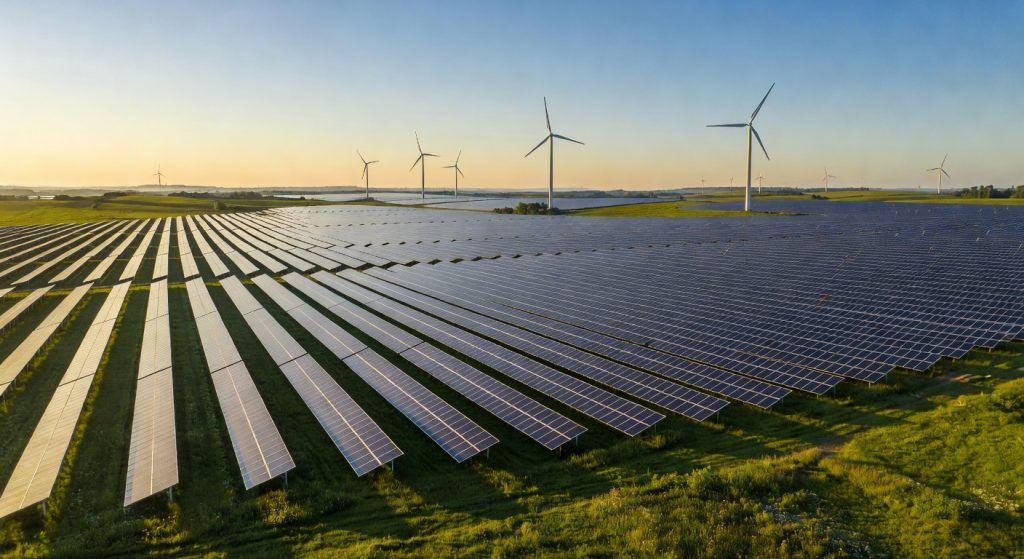
The global energy transition is no longer a distant ambition — it is happening at gigawatt scale, with deals and regulatory frameworks that are reshaping how electricity is produced, stored, and delivered. From a landmark 4 GW solar and storage agreement in the United States to a wave of European investments in hybrid renewable projects, the momentum behind clean energy is accelerating faster than many predicted. For citizens, businesses, and policymakers alike, understanding these shifts is essential.
A 4 GW Milestone: What Grid-Scale Solar Really Means
A major US utility has signed a 4 gigawatt deal for solar power and energy storage development — one of the largest single agreements of its kind. To put that in perspective, 4 GW is roughly equivalent to the output of four large nuclear reactors, enough to power millions of homes. The deal, reported by PV Magazine, is designed to accelerate renewable integration while improving grid stability at a time when energy demands from data centres, electric vehicles, and industrial electrification are rising sharply.
The inclusion of energy storage is particularly significant. Solar generation is intermittent by nature — it peaks at midday and disappears at night. Pairing solar capacity with battery storage transforms it into a dispatchable resource, one that grid operators can rely on to balance supply and demand around the clock. This model is increasingly seen as the backbone of future energy efficiency and resource management strategies worldwide.
While this deal is American, its implications are global. It signals to investors, developers, and regulators everywhere that utility-scale solar-plus-storage is commercially mature and bankable at unprecedented scale.
Europe Doubles Down on Hybrid Renewables and Grid Upgrades
Across the Atlantic, Europe is pursuing its own ambitious trajectory. Several key developments this week illustrate the continent’s strategic direction:
- CIP acquires Ørsted’s onshore unit and launches Perigus Energy, a new platform with 826 MW of capacity, reinforcing Europe’s commitment to hybrid renewable investments that combine wind, solar, and storage in integrated projects.
- Aream has launched a dedicated fund targeting European renewable hybrids, channelling capital into policy-driven growth across wind, solar, and storage solutions on the continent.
- National Grid is expanding its Dynamic Line Rating (DLR) technology across 585 kilometres of British grid routes, a move that enhances energy efficiency by allowing existing infrastructure to carry more power without costly new construction.
The emergence of hybrid renewable projects — combining wind, solar, and increasingly hydrogen production or storage — reflects a maturing understanding of how grids must evolve. Single-technology projects are giving way to integrated systems designed for resilience, flexibility, and maximum resource management. The Aream fund and the Perigus Energy launch are clear signals that institutional capital is aligning with this vision.
National Grid’s DLR expansion deserves particular attention. By using real-time data on temperature, wind speed, and electrical load, DLR technology allows power lines to safely transmit more electricity than their static ratings suggest. Across 585 km of routes, this translates into meaningful gains in renewable integration without waiting years for new infrastructure — a pragmatic solution that complements longer-term grid investment.
Regulatory Pressure: Compliance Deadlines for Clean Energy Operators
Alongside investment, regulation is tightening. In the United States, the North American Electric Reliability Corporation (NERC) has set a firm deadline: owners of inverter-based resources (IBRs) — including solar and wind installations — must register with NERC by May 15, 2026, or face financial penalties. IBRs interact with the grid differently from conventional generators, and their rapid proliferation has created new challenges for grid stability and oversight.
This regulatory push mirrors trends in Europe, where grid codes and compliance frameworks for distributed renewable assets are also becoming more stringent. For solar and wind operators, meeting these requirements is not merely a legal obligation — it is a prerequisite for maintaining operating licences and investor confidence.
What This Means for Europe’s Energy Future
The convergence of massive deal-making, hybrid investment funds, grid modernisation, and tightening regulation paints a coherent picture: the energy system is being rebuilt from the ground up, at speed. For European citizens, this means cleaner air, greater energy security, and — over time — more stable energy prices less exposed to fossil fuel volatility. For businesses, it opens opportunities in manufacturing, services, and finance tied to the renewable supply chain. For policymakers, it underscores the urgency of aligning permitting, grid investment, and regulatory frameworks to keep pace with private-sector ambition.
Key takeaway: Whether it is a 4 GW solar deal in the US, a new hybrid energy fund in Europe, or smarter use of existing grid infrastructure in the UK, the message is consistent — the renewable energy transition is accelerating, and the decisions made today will define the energy landscape for decades to come.