Green Tech Breakthroughs: Clean Steel, Next-Gen Solar, and Battery Recycling Reshape the Energy Transition
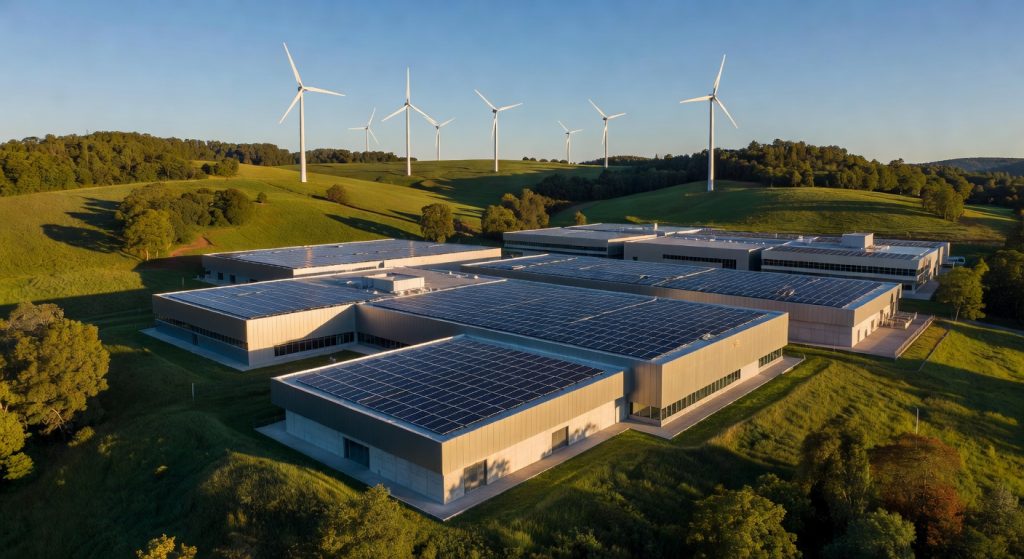
The pace of green innovation rarely slows, but some weeks deliver a cluster of breakthroughs that signal genuine structural shifts in how we produce energy, build cities, and manufacture goods. This is one of those weeks. Across the steel industry, solar technology, and battery recycling, a new wave of cleantech advances is reshaping the foundations of the energy transition — with implications that stretch well beyond the United States, touching European industry, policy, and everyday consumers.
Clean Steel Gets a $2 Billion Vote of Confidence
Steel is one of the most carbon-intensive industries on the planet, responsible for roughly 7–9% of global CO₂ emissions. That is why U.S. Steel’s announcement of a $2 billion investment in a direct reduced iron (DRI) facility at its Big River Steel Works in Arkansas deserves serious attention from anyone tracking industrial decarbonisation.
DRI technology uses hydrogen or natural gas to reduce iron ore without the traditional blast furnace, producing a cleaner feedstock that feeds directly into electric arc furnaces (EAF) — the same technology already favoured by European green steel pioneers like SSAB and H2 Green Steel in Scandinavia. The result is steel production with dramatically lower emissions, potentially approaching near-zero when powered by renewable electricity.
For Europe, where the EU’s Carbon Border Adjustment Mechanism (CBAM) is already pushing trading partners to clean up their industrial processes, this U.S. investment is a meaningful signal. It suggests that pollution-free manufacturing is becoming economically viable at scale — not just a European policy experiment, but a global industrial trend. European steelmakers, already under pressure to decarbonise by 2030, will watch this facility closely as a benchmark for cost and performance.
Solar Innovation: Tandem Panels and the Race for Efficiency
On the solar front, California-based Tandem PV has secured a $4 million grant from the California Energy Commission to commercialise perovskite-silicon tandem solar panels — a technology that has generated enormous excitement in the scientific community for years but has struggled to make the leap from laboratory to rooftop.
Traditional silicon solar panels have an efficiency ceiling of around 29% under ideal conditions. Perovskite-silicon tandem cells, by stacking two light-absorbing layers, have already demonstrated efficiencies exceeding 33% in laboratory settings. If Tandem PV and others can solve the durability and manufacturing challenges at scale, the implications for solar energy economics are profound: more power from the same surface area means lower costs per kilowatt-hour and faster payback periods for homeowners, businesses, and utilities alike.
This matters enormously for Europe, where rooftop space in dense urban environments is limited and solar irradiance is lower than in California or the Middle East. Higher-efficiency panels could unlock solar potential in northern European cities — from Amsterdam to Warsaw — that current technology leaves underexploited. It also feeds directly into the EU’s Solar Energy Strategy, which targets 600 GW of solar capacity by 2030.
Battery Recycling and Smart Construction: Closing the Loop
Two further developments round out this week’s green technology picture. Researchers at Rice University have developed a faster, more energy-efficient method to recover critical minerals — including lithium, cobalt, and nickel — from spent lithium-ion batteries. As electric mobility accelerates and millions of EV batteries approach end-of-life, the ability to recycle these materials efficiently is not a niche concern: it is a strategic necessity. Europe’s Critical Raw Materials Act explicitly identifies battery mineral supply chains as a sovereignty issue, and domestic recycling capacity is central to reducing dependence on imports from China and the Democratic Republic of Congo.
Meanwhile, an MIT study has highlighted robotically assembled modular building blocks as a lower-carbon approach to large-scale construction — a finding with direct relevance to the development of smart cities across Europe, where construction accounts for nearly 40% of total energy consumption and a significant share of embodied carbon in new infrastructure.
What This Means for Europe and the Energy Transition
Taken together, these developments paint a coherent picture: the energy transition is no longer driven solely by policy mandates. It is increasingly pulled forward by economic logic, engineering ingenuity, and competitive pressure. Europe has led on regulation — the Green Deal, CBAM, the Battery Regulation — but the innovation is now genuinely global.
- Policymakers should track DRI-EAF steel as a model for accelerating industrial decarbonisation targets under the EU Emissions Trading System.
- Investors and businesses should watch perovskite solar commercialisation timelines closely — the first company to crack durability at scale will reshape the solar market.
- Citizens benefit directly: cleaner manufacturing means cleaner air, and more efficient solar means lower energy bills.
Key takeaway: Green technology is maturing rapidly across multiple sectors simultaneously. The challenge for Europe is not to wait for innovation to arrive — it is to ensure the regulatory environment, industrial policy, and investment frameworks are ready to absorb and scale it when it does.