Africa’s Forests Are Now Carbon Emitters: What This Means for Global Climate Targets
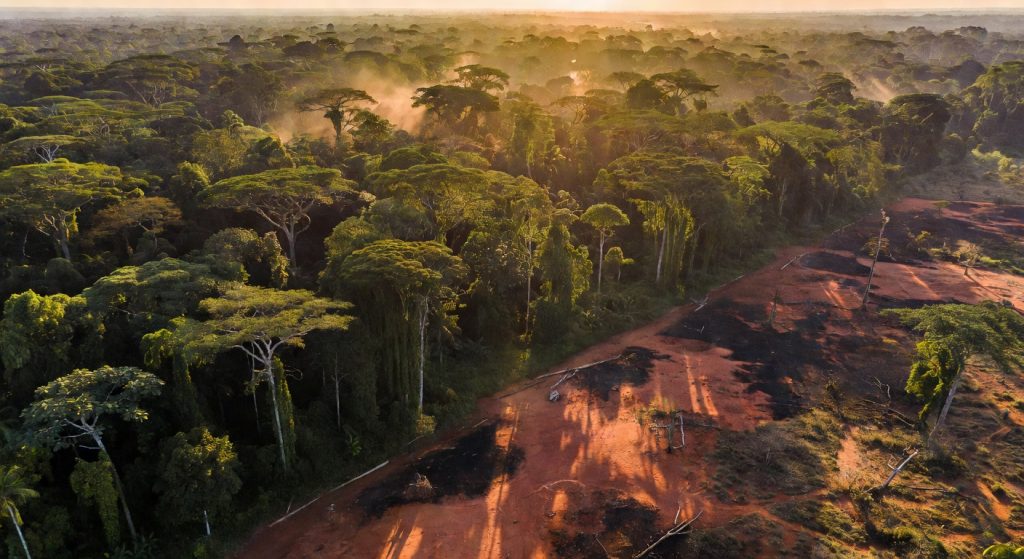
For decades, Africa’s vast tropical forests stood as one of the planet’s most powerful natural defenses against climate change — quietly absorbing billions of tonnes of carbon dioxide each year. That era may now be over. According to research published in April 2026, Africa’s forests have switched from carbon absorbers to net carbon emitters following relentless deforestation across the continent’s tropical regions since 2010. The implications for global environmental policy, biodiversity conservation, and the fight against climate change are profound — and deeply unsettling.
From Carbon Sink to Carbon Source: What the Science Says
The shift is not a gradual drift — it represents a fundamental reversal in the role African ecosystems play in the global carbon cycle. Tropical forests in the Congo Basin, West Africa, and East African highland regions have historically acted as critical carbon sinks, locking away CO₂ through photosynthesis and biomass accumulation. But accelerating deforestation driven by agricultural expansion, illegal logging, and infrastructure development has tipped the balance.
When forests are cleared or degraded, they release the carbon stored in trees, soil, and vegetation back into the atmosphere. At sufficient scale, this transforms a natural climate ally into a climate liability. Scientists warn that this tipping point — once considered a distant worst-case scenario — has already been crossed on the African continent. The consequences extend far beyond carbon accounting: biodiversity loss, disrupted rainfall patterns, and accelerated soil erosion follow deforestation like shadows.
This finding arrives alongside equally alarming data: migratory freshwater fish populations have declined by roughly 81% since 1970, according to research from March 2026 — a collapse driven in large part by habitat destruction, pollution, and climate-related changes to river systems. Together, these figures paint a picture of ecosystems under simultaneous, compounding stress.
A European Perspective: Policy Gaps and Global Responsibility
Europe cannot afford to view Africa’s forest crisis as a distant problem. The European Union has positioned itself as a global leader in environmental policy, with ambitious targets under the European Green Deal and the EU Biodiversity Strategy for 2030. Yet European demand for commodities — including soy, palm oil, cocoa, and timber — continues to drive deforestation in tropical regions, including Africa.
The EU Deforestation Regulation (EUDR), which requires companies to ensure products sold in Europe have not contributed to deforestation, was a landmark step. But its implementation has faced delays and political pushback from both industry lobbies and trading partner governments. Closing the gap between legislative ambition and on-the-ground enforcement is now more urgent than ever.
- European financial institutions must screen investments in African agriculture and infrastructure for deforestation risk.
- Trade agreements should include binding, enforceable environmental standards — not voluntary commitments.
- EU climate finance pledges to developing nations must prioritize forest protection and restoration alongside renewable energy transitions.
Meanwhile, the broader international community faces a credibility test. With UN climate negotiations continuing and national governments submitting updated climate pledges, the loss of Africa’s forests fundamentally undermines the carbon budgets underpinning the Paris Agreement’s 1.5°C target.
What Comes Next: Restoration, Accountability, and Urgency
The science is unambiguous: halting deforestation and restoring degraded forests is one of the most cost-effective climate solutions available. The UN’s REDD+ framework exists precisely to incentivize forest conservation in developing nations, but funding has consistently fallen short of what is needed. Experts estimate that protecting and restoring tropical forests could deliver up to 30% of the emissions reductions needed by 2030 — but only if political will and financial flows match the scale of the crisis.
Technological tools — from satellite monitoring to AI-driven deforestation alerts — are improving our ability to track forest loss in near real time. The challenge is no longer visibility; it is accountability and action. Governments, corporations, and consumers in high-income nations must confront their role in driving the demand chains that end in cleared forest.
Key takeaway: Africa’s forests crossing the threshold from carbon sink to carbon emitter is not just an environmental statistic — it is a system-level warning. For European policymakers, businesses, and citizens, the message is clear: the decisions made in Brussels, Berlin, and Paris about trade, investment, and consumption have direct consequences for the forests of the Congo and beyond. Protecting what remains, and restoring what has been lost, must become a non-negotiable pillar of any credible climate and biodiversity strategy.