Five Years of the EU Green Deal: What Has Changed and What Comes Next
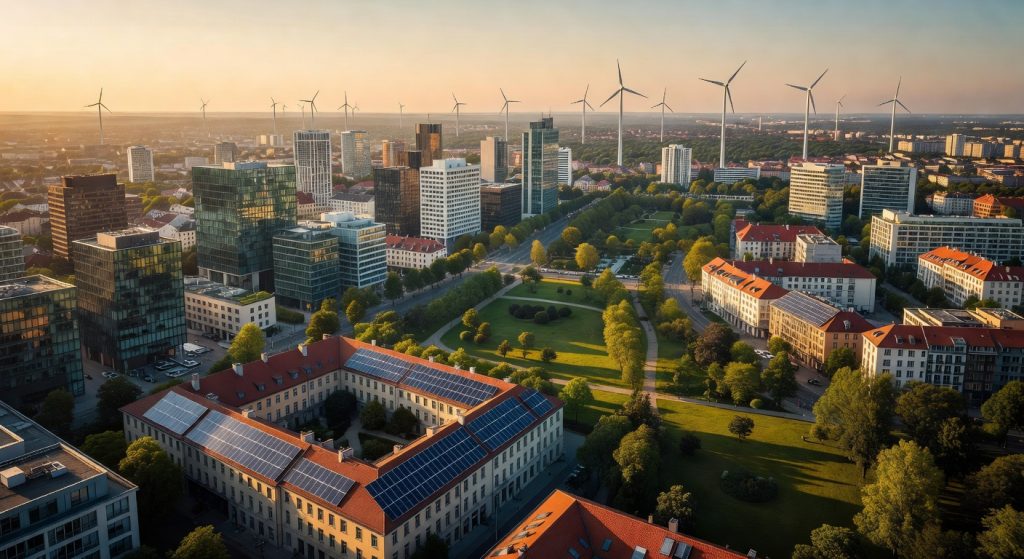
When the European Commission unveiled the EU Green Deal in December 2019, it was the most ambitious climate policy package the bloc had ever attempted. Five years on, the balance sheet is mixed but meaningful: emissions are falling faster than expected, clean technology investment has surged, and a new generation of environmental regulation is reshaping how businesses operate across the continent. Yet economic headwinds, political friction, and the sheer complexity of implementation are testing the project’s resilience as Europe looks toward 2050.
A Stronger Emissions Trajectory — But the Hard Part Lies Ahead
Perhaps the most striking headline from the Green Deal’s first five years is the shift in Europe’s emissions trajectory. Before the package was launched, the EU was on course for a 33% reduction in greenhouse gas emissions by 2030 compared to 1990 levels. That figure has now climbed to a projected 52% — a significant leap driven by the ‘Fit for 55’ legislative agenda and a wave of concrete measures adopted in 2024.
Among the most consequential recent steps are the revised Energy Performance in Buildings Directive, the new Gas Regulation and Directive, and the Methane Regulation — all adopted in 2024 and all designed to accelerate the phase-out of fossil fuels across key sectors. These are not aspirational documents; they carry binding obligations for member states and, by extension, for the businesses and citizens who depend on those energy systems.
Still, ambition is not the same as delivery. The update of National Energy and Climate Plans (NECPs), which translate EU targets into national roadmaps, has been painfully slow. Calls are growing louder for an even more ambitious 2035 target of 78% emissions reduction, alongside full coal phase-out by 2030 and gas by 2035. Whether member states have the political will — and the industrial capacity — to meet those milestones remains an open question.
Carbon Markets, Industrial Policy, and the Competitiveness Dilemma
The expansion of the EU Emissions Trading System (EU ETS) to cover buildings and road transport is one of the most consequential — and contested — moves in recent climate policy. With revenues already exceeding €200 billion, the ETS is a powerful instrument. But extending carbon pricing to sectors that directly affect household energy bills and transport costs raises serious questions about fairness and political sustainability.
Alongside the ETS, the Carbon Border Adjustment Mechanism (CBAM) is moving toward full operations by 2026. Designed to prevent carbon leakage by pricing imports from countries with weaker climate standards, CBAM is also a statement about Europe’s ambition to drive global green production standards. Some advocates are pushing for CBAM revenues to be channelled into climate finance for developing countries — a move that would strengthen the EU’s international credibility.
On the industrial side, the Net-Zero Industry Act and the Critical Raw Materials Act are positioning Europe to compete in the global race for clean technology manufacturing — batteries, green hydrogen, and clean mobility infrastructure. The Green Deal Industrial Plan underpins this effort, though questions about regulatory simplification and speed of permitting continue to dog implementation. The EU is now actively streamlining regulations to reduce the burden on businesses without compromising environmental standards — a delicate balancing act.
Just Transition: Fairness Cannot Be an Afterthought
The social dimension of the Green Deal — often called the just transition — is where sustainability reporting frameworks and policy ambition must connect with lived reality. Coal-dependent regions, energy-intensive industries, and lower-income households face disproportionate exposure to the costs of decarbonisation. The Social Climate Fund, financed through ETS revenues, is designed to cushion these impacts, but civil society groups argue it remains underfunded relative to the scale of the challenge.
For businesses, the evolving landscape of sustainability reporting under the Corporate Sustainability Reporting Directive (CSRD) adds another layer of complexity — and opportunity. Transparent disclosure of climate risks and transition plans is becoming a baseline expectation, not a differentiator.
What This Means for Citizens, Businesses, and Policymakers
- Citizens will feel the Green Deal most directly through energy costs, building renovation requirements, and transport pricing — making clear communication and targeted social support essential.
- Businesses must navigate a tightening web of environmental regulation, carbon pricing, and reporting obligations — but also access growing opportunities in clean tech and green finance.
- Policymakers face the challenge of maintaining momentum while managing economic pressures, ensuring that simplification does not become a backdoor for weakening climate commitments.
The key takeaway: The EU Green Deal has moved Europe further and faster than many expected. But five years in, the project is entering its most demanding phase — one where enforcement, fairness, and industrial transformation must advance together. The next chapter will be written not in Brussels, but in factories, homes, and energy grids across the continent.