From a $3.2 Million Tuna to Endangered Penguins: The True Cost of Our Climate and Biodiversity Crisis
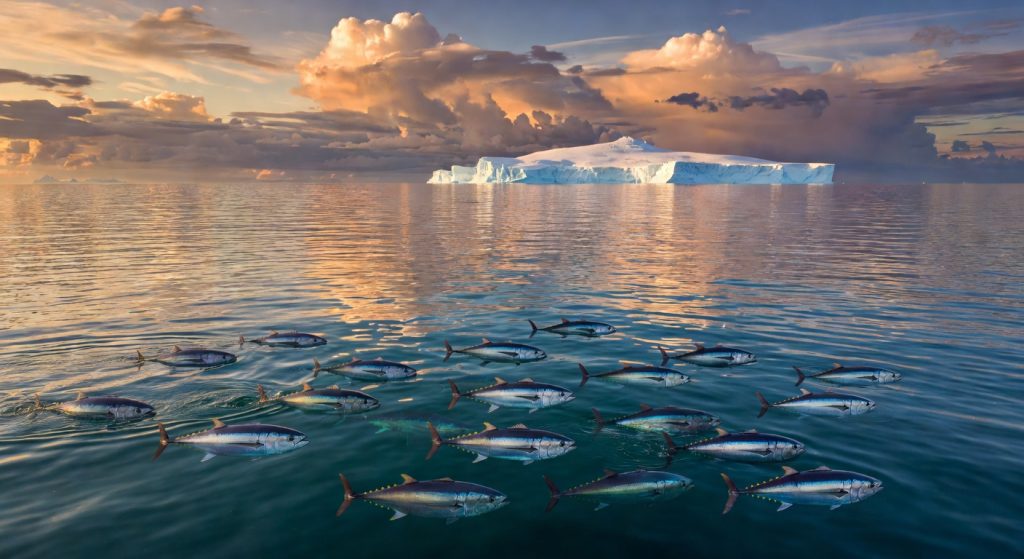
At the start of 2026, a single bluefin tuna sold for $3.2 million at Tokyo’s Toyosu market — a staggering 510 million yen for a 535-pound fish. The spectacle made headlines worldwide, but behind the glamour of the auction lies a deeply troubling reality: the ocean ecosystems that sustain life on this planet are under unprecedented pressure. From overfished seas to warming waters melting Antarctic ice, the signals are converging into a single, urgent warning.
Overfishing and Ocean Stress: A Crisis Hidden in Plain Sight
The record price paid for that bluefin tuna is not a sign of abundance — it is a symptom of scarcity. According to UN reports, global fish stocks are being depleted faster than they can recover, threatening both marine biodiversity and the food security of hundreds of millions of people who depend on seafood as a primary protein source. Atlantic bluefin tuna, once commercially hunted to near-collapse, remains under intense pressure despite years of conservation efforts and catch quotas managed by bodies like ICCAT (the International Commission for the Conservation of Atlantic Tunas).
For Europe, this is not a distant problem. Mediterranean and North Atlantic fisheries are central to the economies of countries like Spain, Portugal, Italy, and Greece. European environmental policy — including the EU’s Common Fisheries Policy — has made progress, but enforcement gaps and rising ocean temperatures driven by climate change are undermining recovery efforts. Warmer, more acidic oceans disrupt fish migration patterns, reduce reproductive success, and degrade the coral and kelp ecosystems that serve as nurseries for marine life.
Biodiversity in Freefall: From Penguins to Plankton
The bluefin tuna is not alone in its struggle. The recent declaration of the emperor penguin as endangered — driven by climate-induced sea ice loss in Antarctica — marks another milestone in what scientists are calling the sixth mass extinction. These iconic birds depend on stable ice platforms to breed; as warming accelerates, their habitat is literally disappearing beneath them.
The broader picture is equally alarming. The UNEP Emissions Gap Report 2025 projects global warming of 2.3–2.5°C even if all current Paris Agreement pledges are fully implemented — a trajectory that would devastate ecosystems from the Arctic to the tropics. The report calls for a 55% reduction in greenhouse gas emissions by 2035, a target that demands immediate, structural transformation of energy, transport, agriculture, and industry.
Meanwhile, the WMO’s State of Climate in the Arab Region 2024 reports record heat doubling the global average, affecting 3.8 million people and accelerating desertification. These are not isolated regional events — they are interconnected threads in a global fabric of ecological breakdown, amplified by pollution, habitat destruction, and the continued burning of fossil fuels.
The Cooling Paradox and the Path Forward
One of the most striking policy challenges to emerge from recent UN analysis is what might be called the cooling paradox. As temperatures rise, demand for air conditioning is projected to triple by 2050 — and if powered by conventional energy sources, this could double greenhouse gas emissions from the cooling sector alone. The UN’s proposed Sustainable Cooling Pathway offers a way out: by combining energy efficiency standards, renewable energy integration, and smarter urban design, it could protect 3 billion people from dangerous heat while avoiding a catastrophic feedback loop. The economic case is compelling too — sustainable cooling could save an estimated $43 trillion globally.
Europe is well-positioned to lead here. The EU’s energy efficiency directives, green building standards, and accelerating rollout of solar and wind power create a foundation. But ambition must match the scale of the crisis.
What This Means for Citizens, Businesses, and Policymakers
- Citizens face rising food costs, health risks from extreme heat, and the gradual erosion of natural spaces and species they value.
- Businesses in fisheries, tourism, insurance, and energy face mounting physical and regulatory risks as climate impacts intensify.
- Policymakers must close the gap between pledges and action — tightening fishing quotas, accelerating the phase-out of fossil fuels, and investing in nature-based solutions.
The key takeaway is simple but urgent: a $3.2 million tuna and an endangered penguin are not unrelated curiosities — they are indicators of a system under extreme stress. The science is clear, the economic case for action is strong, and the window for meaningful intervention is narrowing. Europe has both the tools and the responsibility to act decisively, at home and on the global stage.