Africa’s Forests Are Now Emitting Carbon: What This Means for the Global Climate
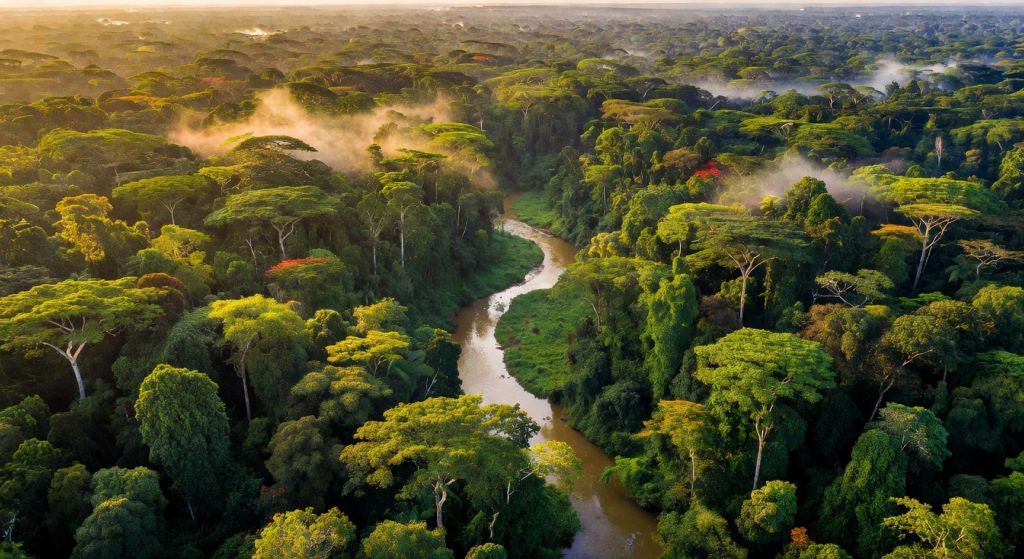
For decades, Africa’s vast tropical forests were counted among the planet’s most powerful allies in the fight against climate change — quietly absorbing billions of tonnes of CO₂ each year. That era is over. According to new research highlighted by ScienceDaily (April 13, 2026), Africa’s forests have reversed course since 2010, now emitting more carbon than they absorb. The primary culprit is heavy deforestation, which is stripping away biomass faster than regrowth can compensate. This is not just an African crisis — it is a global one, with direct consequences for climate targets, biodiversity, and the environmental policies being debated right now in Brussels and beyond.
From Carbon Sink to Carbon Source: How It Happened
The mechanics are straightforward, even if the implications are staggering. Tropical forests store enormous quantities of carbon in their trees, roots, and soil. When those trees are felled — for agriculture, logging, or infrastructure — that stored carbon is released into the atmosphere. Africa’s deforestation rate has accelerated sharply over the past fifteen years, driven by expanding farmland, charcoal production, and commercial timber extraction.
The critical threshold was crossed when biomass losses from deforestation began consistently outpacing the carbon absorbed by regrowing forests. The result: a net positive flow of CO₂ from the continent’s forests into the atmosphere. This fundamentally undermines global carbon budgets, including the assumptions built into the Paris Agreement’s 1.5°C pathway. Europe, which has positioned itself as a leader in climate action through the Green Deal, cannot afford to treat this as a distant problem — African forest carbon is part of every credible net-zero scenario.
A Cascade of Climate Signals: Ice, Oceans, and Toxic Air
Africa’s forests are not the only system sending distress signals. A cluster of recent developments paints a troubling picture of accelerating climate feedback loops:
- Arctic sea ice at record lows: NASA reports that Arctic winter sea ice reached its lowest extent on record this year. Less ice means more permafrost thaw, which releases ancient stores of methane and CO₂ — gases that had been locked underground for thousands of years. This creates a self-reinforcing warming cycle that no renewable energy transition alone can quickly reverse.
- Gray whales rerouting into San Francisco Bay: Disrupted Arctic food supplies — a direct consequence of warming oceans — are pushing gray whales into unfamiliar waters, with high mortality rates reported. Marine biodiversity is reshaping itself in real time, with consequences for entire ocean ecosystems.
- A new airborne pollutant detected in the U.S.: Medium-chain chlorinated paraffins (MCCPs), industrial chemicals linked to sewage sludge used as agricultural fertilizer, have been found in U.S. air for the first time. This emerging pollution pathway raises urgent questions about chemical regulation — questions that European environmental policy, particularly REACH reform, is only beginning to address.
Meanwhile, the U.S. Climate Prediction Center forecasts continued drought expansion across the West and Plains through spring 2026, with El Niño conditions likely arriving by May–July. Drought stresses agriculture, depletes water reserves, and increases wildfire risk — pressures already familiar to southern European nations like Spain, Italy, and Greece.
What This Means for Policy and Conservation
The convergence of these signals demands a policy response that matches the scale of the problem. For European decision-makers, several priorities stand out:
- Strengthen the EU Deforestation Regulation (EUDR): The regulation, which requires companies to prove that imported goods have not contributed to deforestation, is a critical tool. Its full enforcement — currently delayed — must be treated as non-negotiable.
- Invest in African conservation partnerships: Protecting African forests is not charity; it is climate self-interest. European climate finance must flow more decisively toward forest conservation and sustainable land management on the continent.
- Expand chemical monitoring frameworks: The detection of MCCPs in air underscores how pollution pathways evolve faster than regulation. Europe’s chemicals strategy must anticipate emerging contaminants, not just react to them.
The broader takeaway is uncomfortable but necessary: the natural systems we have relied upon to buffer our emissions are weakening. Forests, oceans, and frozen ground are all absorbing less — or releasing more. This does not make the renewable energy transition less important; it makes it more urgent, and it raises the stakes for every conservation decision made today.
Key takeaway: Africa’s forests crossing from carbon sink to carbon source is a landmark moment in climate science. Combined with record Arctic ice loss, shifting marine migrations, and new toxic pollutants, the evidence demands faster, bolder action on environmental policy — from Rome to Brussels to Nairobi.