Five Years of the EU Green Deal: What Has Been Achieved, What Is Still at Stake
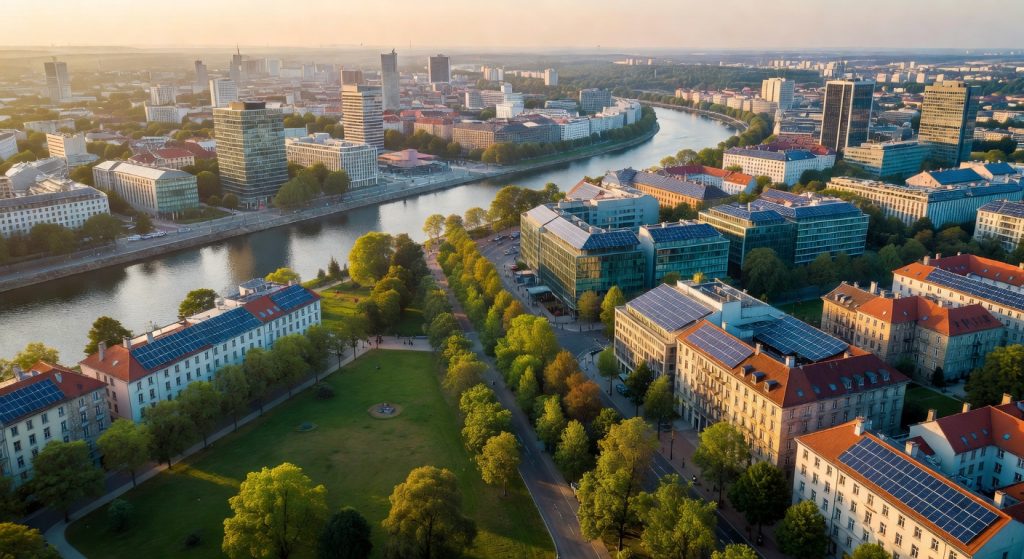
When the European Commission launched the EU Green Deal in December 2019, it was billed as Europe’s moonshot: a comprehensive roadmap to make the continent climate-neutral by 2050. Five years later, the picture is one of genuine progress shadowed by mounting political and economic pressures. A February 2026 review by A&O Shearman captures the tension well — significant milestones have been reached, but the path forward demands sharper focus and stronger political will.
What Five Years of Climate Policy Have Actually Delivered
The achievements are not trivial. EU greenhouse gas emissions have continued to decline, clean technology investment has scaled substantially, and sustainability reporting frameworks — once voluntary and fragmented — have matured into binding corporate obligations under the Corporate Sustainability Reporting Directive (CSRD). Perhaps most consequentially, the EU Emissions Trading System (ETS) has been expanded to cover buildings and road transport, two of the hardest sectors to decarbonise. That expansion has generated over €200 billion for green transition funds, channelling capital toward renewables, energy efficiency, and industrial transformation.
The Carbon Border Adjustment Mechanism (CBAM), set for full operation by 2026, is another landmark. By placing a carbon price on imports from countries with weaker climate policy, it aims to prevent carbon leakage and — crucially — incentivise greener production standards beyond Europe’s borders. For global trade, this is a structural shift, not a footnote.
On long-term targets, EU member states agreed in a last-minute deal ahead of COP30 to a legally binding 90% reduction in greenhouse gas emissions by 2040 compared to 1990 levels, with an interim target of 66.25–72.5% by 2035. These figures anchor the EU’s Nationally Determined Contribution (NDC) and signal continued ambition on the international stage.
Where the Green Deal Is Losing Ground
Yet the review also lays bare the cracks. Finalising the 2040 climate target within the EU Climate Law has faced persistent delays, with diplomats acknowledging that more negotiating time is needed. France has pushed for heads-of-state level approval, adding procedural complexity to an already contested process. Meanwhile, some analysts and advocacy groups argue the current trajectory falls short: proposals have emerged calling for a more ambitious 65% emissions reduction by 2030 and net-zero by 2040 — a step beyond the Commission’s current position.
The revision of the Energy Taxation Directive, a key pillar of the “Fit for 55” package designed to align tax policy with climate goals and incentivise renewables, remains unfinished. National energy and climate plans submitted by member states have also revealed shortfalls against EU-level targets, raising questions about implementation rather than legislation alone.
Economically, the context has shifted. Slower growth across the eurozone and rising industrial competitiveness concerns — sharpened by competition from the United States and China — have fuelled calls to ease the regulatory burden on business. The result is a real tension between environmental regulation and economic pragmatism that will define the next phase of Green Deal governance.
Implications for Business, Citizens, and Global Partners
For companies operating in Europe, the immediate priority signalled by policymakers is regulatory stabilisation — reducing uncertainty so that long-term investment decisions in clean technology and infrastructure can proceed with confidence. Sectors that are hardest to abate, including steel, cement, and chemicals, need clearer policy signals and dedicated support mechanisms to make the transition financially viable.
For citizens, the expansion of carbon markets to buildings and transport will increasingly touch everyday life — from heating costs to fuel prices — making it essential that transition policies are paired with social protection measures. For global partners, CBAM and the EU’s NDC commitments set a benchmark that other major economies will be watching closely ahead of COP30.
Key priorities now on the table include:
- Finalising the EU Climate Law review with a credible 2040 target
- Completing the Energy Taxation Directive revision to support renewables
- Scaling green industrial policy through the Net-Zero Industry Act and Critical Raw Materials Act
- Ensuring carbon markets revenues are directed equitably toward vulnerable households and hard-to-abate industries
The key takeaway: the EU Green Deal at five is neither a failure nor a finished success. It has built real institutional infrastructure — from carbon markets to sustainability reporting — that would have seemed ambitious a decade ago. But political consensus is fraying at the edges, implementation gaps are widening, and the window to align short-term policy with long-term climate commitments is narrowing. Europe’s credibility as a global climate leader depends on what it does in the next five years, not just what it agreed in the last five.