Solar Power Surge: How the UK, India, and the US Are Reshaping the Global Energy Map
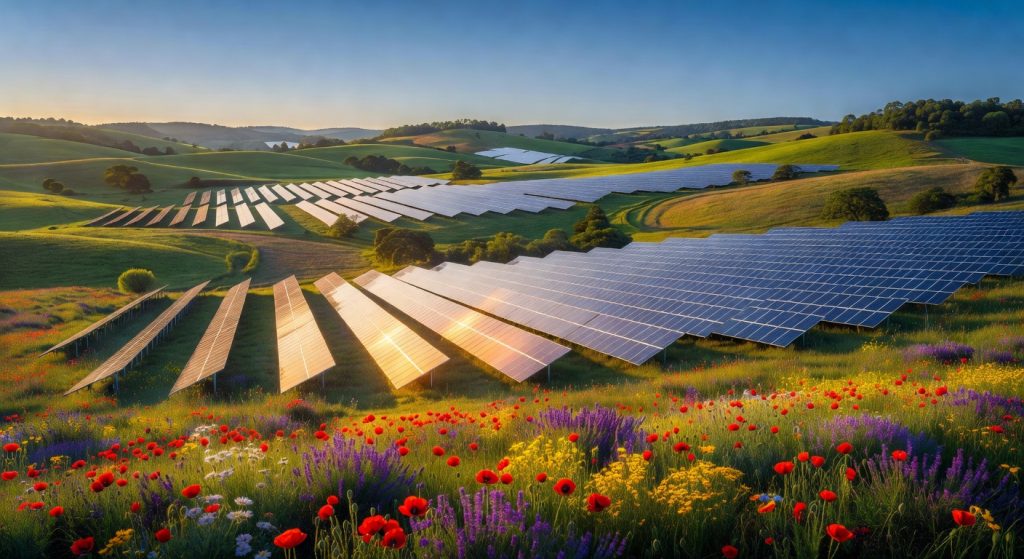
A wave of record-breaking solar approvals and capacity milestones is sweeping across three continents, signalling that the renewable energy transition has moved decisively from ambition to execution. For European citizens, professionals, and policymakers, the signals arriving from London, New Delhi, and Washington are impossible to ignore — and carry direct consequences for energy prices, grid reliability, and climate commitments closer to home.
The UK Sets a New Benchmark for Solar Energy
The UK government has approved what will become its largest power-producing solar farm, a landmark decision that marks a significant shift in British energy policy after years of cautious planning reform. The project, alongside a separate planning approval for a solar-plus-storage site in Nottinghamshire by One Planet Developments, demonstrates that large-scale renewable energy infrastructure is finally clearing the regulatory hurdles that have long frustrated developers.
For the broader European context, this matters enormously. Grid reliability remains a central concern as the continent phases out fossil fuels, and integrated solar-plus-storage projects directly address the intermittency challenge that critics of wind and solar power have long cited. By pairing generation with on-site storage, these facilities can smooth supply curves and reduce pressure on transmission networks — a model that other EU member states are watching closely as they design their own capacity expansion programmes.
The UK’s move also sends a signal to investors: political will is consolidating around large-scale clean energy, making long-term capital commitments more bankable. This is critical at a moment when grid upgrades and financing for renewables are identified as key bottlenecks to scaling clean power across Europe.
India’s 45 GW Milestone and What It Means for Global Supply Chains
While Europe accelerates, India has just posted a number that reframes the entire global conversation. In FY 2025–26, India added a record 45 GW of solar PV capacity in a single year, vaulting it into third place globally for installed solar capacity and positioning it as a credible leader in the net-zero transition. The country is now targeting a 150 GW cumulative milestone as a near-term waypoint.
The implications for resource management and supply chains are profound. As India scales its domestic manufacturing base for solar panels and associated components, it is reshaping global pricing dynamics — potentially driving down costs for European installers and utilities. Cheaper panels mean faster payback periods for both utility-scale projects and rooftop installations, improving energy efficiency economics for households and businesses alike.
There is also a geopolitical dimension. India’s rise as a solar superpower diversifies the global supply chain away from a single dominant manufacturer, reducing concentration risk — a concern that European policymakers have flagged repeatedly in the context of strategic autonomy and industrial resilience.
Battery Storage Breakthroughs and the US Capacity Record
Two further developments deserve close attention from anyone tracking the energy efficiency and storage landscape. First, a new study on sodium-ion batteries claims a breakthrough in eliminating thermal runaway — the dangerous overheating phenomenon that has limited the deployment of large-scale battery systems. If validated at commercial scale, sodium-ion technology could offer a safer, more affordable alternative to lithium-ion storage, with direct benefits for European grid stability and citizen access to affordable clean energy. Sodium is abundant and widely distributed, unlike lithium, making it a strategically attractive option for European resource management.
Second, the United States added a record 50 GW of wind, solar, and battery capacity in 2025, despite a challenging policy environment. Strikingly, much of this growth was driven by surging demand from data centres and AI infrastructure — a reminder that the clean energy transition is increasingly being pulled forward by commercial necessity, not just regulation.
Implications for Europe and the Path Ahead
Taken together, these developments paint a picture of a global energy system in rapid, structural transformation. For Europe, the key implications are clear:
- Planning reform is non-negotiable. The UK’s approvals show what becomes possible when permitting processes are streamlined. EU member states facing backlogs in renewable project approvals should take note.
- Storage is the missing link. Advances in sodium-ion batteries and the proliferation of solar-plus-storage projects underline that intermittency is a solvable problem — but investment must follow.
- Global competition sharpens the case for action. As India and the US race ahead, Europe’s renewable leadership can no longer be taken for granted. Ambition must be matched by execution.
Key takeaway: The global solar and wind expansion is no longer a future scenario — it is the present reality. For European citizens and decision-makers alike, the question is not whether to participate in this transition, but how quickly and equitably to do so.