EU Green Deal in 2026: Carbon Markets, Industrial Policy, and the Push for Higher Climate Ambition
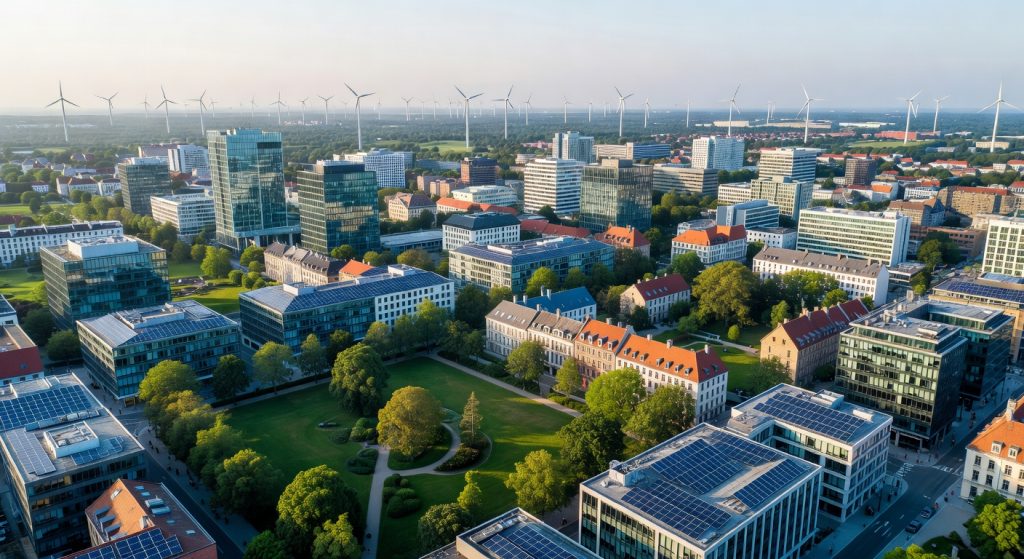
The EU Green Deal has moved well beyond its founding ambitions. As 2026 unfolds, the European Union’s climate architecture is no longer a blueprint — it is operational infrastructure, reshaping industries, trade flows, and public finances across the continent and beyond. From expanded carbon markets to landmark industrial legislation, the policy machinery is running. The question now is whether it is running fast enough.
Carbon Pricing Grows Up: ETS Expansion and CBAM Go Live
The most consequential shift in EU environmental regulation in recent years has been the broadening of the Emissions Trading System (ETS). Previously focused on heavy industry and aviation, the ETS now covers buildings and road transport — two sectors that together account for a significant share of European emissions. The result has been substantial: the expanded system has generated over €200 billion earmarked for green transition funds, providing capital for everything from building retrofits to clean mobility infrastructure.
Running in parallel, the Carbon Border Adjustment Mechanism (CBAM) is now fully operational. Designed to prevent carbon leakage — the risk that European companies simply move polluting production outside the EU — CBAM places a carbon price on imports of steel, cement, aluminium, fertilisers, hydrogen, and electricity. For global exporters, this is no longer a future concern: it is a present commercial reality. The mechanism is already reshaping procurement decisions and investment strategies from Ankara to Mumbai.
Together, ETS and CBAM represent the most ambitious attempt by any major economy to put a genuine price on carbon across its entire economic perimeter. For businesses operating in or trading with Europe, carbon markets are now a core strategic variable, not a compliance footnote.
Industrial Policy Takes Centre Stage: Net-Zero Act and Critical Materials
The EU has learned a hard lesson from the post-pandemic supply chain disruptions and the energy shock triggered by Russia’s invasion of Ukraine: green ambition without industrial capacity is fragile. The response has been a suite of legislation designed to build that capacity at home.
The Net-Zero Industry Act sets a target for Europe to manufacture at least 40% of its clean technology needs domestically by 2030 — covering solar panels, wind turbines, heat pumps, electrolysers, and battery storage. The Critical Raw Materials Act complements this by targeting domestic extraction, processing, and recycling of materials like lithium, cobalt, and rare earths that are essential to the energy transition.
Meanwhile, REPowerEU has directed 40% of its funds toward affordable and accessible clean energy, accelerating permitting processes for renewables that had long been bottlenecked by bureaucratic delays. The goal is explicit: reduce fossil fuel dependency while ensuring the transition does not price out households and smaller businesses.
This industrial turn reflects a broader global competition. With the United States’ Inflation Reduction Act and China’s state-backed clean tech sector both offering massive incentives, Europe has concluded that climate policy and industrial strategy must be designed together, not in separate silos.
The Ambition Gap: Calls for 65% Cuts by 2030 and Net-Zero by 2040
Even as the current framework beds in, a growing coalition of scientists, NGOs, and progressive member states is pushing for the EU to go further. The existing 2030 target — a 55% reduction in greenhouse gas emissions under the Fit for 55 package — is increasingly described as insufficient relative to what the science demands.
Advocates are calling for a 65% GHG reduction target by 2030, alongside the formal adoption of a net-zero by 2040 goal. The European Commission has signalled openness to the 2040 target, but formal legislative processes remain slow. Critics also point to the still-unfinished Energy Taxation Directive, which would align fuel taxation with climate objectives — a reform that has been stalled for years due to the unanimity requirement in EU tax policy.
There is also a justice dimension that deserves more attention. EU strategies around carbon dioxide removal (CDR) and offsetting raise legitimate concerns about effects on the Global South, where land-use pressures from European carbon credit demand can conflict with local food security and biodiversity. A credible sustainability reporting framework — including the Corporate Sustainability Reporting Directive — must grapple honestly with these trade-offs.
What This Means for Citizens, Businesses, and Policymakers
- Businesses trading with or operating in the EU must treat carbon pricing as a permanent cost of doing business and invest in decarbonisation roadmaps now.
- Policymakers outside Europe should expect CBAM to expand in scope — early engagement with EU standards is strategic, not optional.
- Citizens will increasingly feel the Green Deal through energy bills, product prices, and job markets — the just transition narrative must translate into tangible support.
Key takeaway: The EU Green Deal has moved from vision to implementation, but the gap between current policy and the pace the climate crisis demands remains real. The architecture is in place — the urgency now is to use it fully, fairly, and fast.