Record $2.3 Trillion Invested in Energy Transition: What It Means for Europe and the World
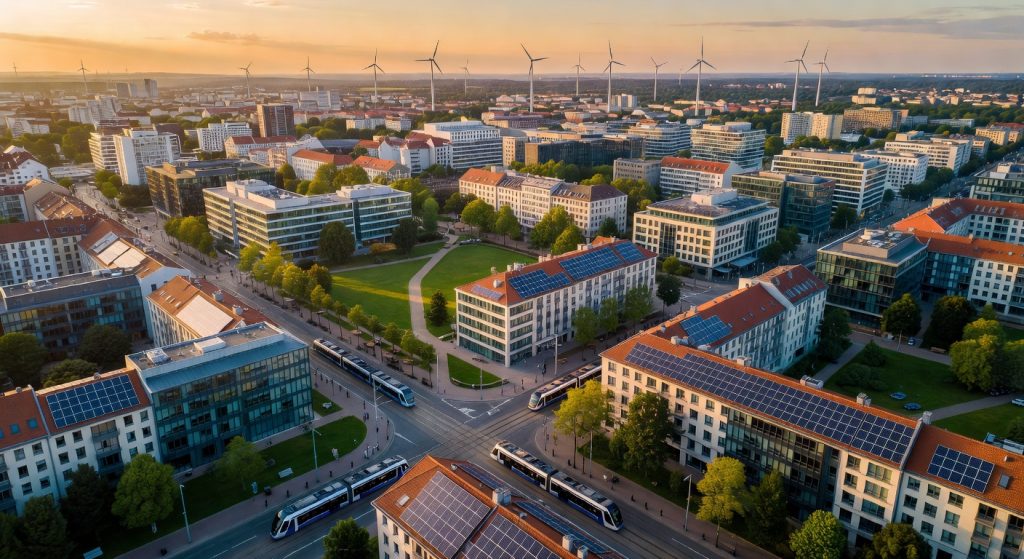
The numbers are in — and they are historic. According to BloombergNEF’s Energy Transition Investment Trends 2026, global investment in the energy transition reached a record $2.3 trillion in 2025, an 8% increase over the previous year. From solar panels and wind farms to green hydrogen, electric vehicles, and smart grids, the shift away from fossil fuels is no longer a distant ambition. It is happening now, at scale, and it is reshaping economies, cities, and industries across the planet.
For European citizens, professionals, and policymakers, this moment carries both opportunity and urgency. Clean energy now accounts for 49% of global electricity generation, and more than 16 million jobs have been created worldwide in the sector. The energy transition is not just an environmental story — it is an economic and geopolitical one.
China Leads, Europe Innovates: A Global Division of Strengths
No country defines the current cleantech landscape more than China. The world’s second-largest economy is electrifying at a pace nine times faster than the global average, building out solar, wind, battery storage, and EV infrastructure at an extraordinary scale. Chinese industrial chains now dominate the supply of photovoltaic panels, lithium-ion batteries, and electric vehicles — making the country both a manufacturing powerhouse and a green growth engine in its own right. The World Economic Forum ranks China 5th globally in energy transition readiness, driven by innovation capacity and ambitious emissions reduction plans.
Europe’s role in this global picture is different — but no less significant. Rather than competing on volume, the continent is carving out leadership in green innovation and green hydrogen. European researchers and companies are at the forefront of hydrogen technology breakthroughs, developing electrolysers, storage solutions, and industrial applications that could decarbonise hard-to-abate sectors like steel and chemicals. This is precisely where European competitiveness can be built and sustained in the decades ahead.
Renewables, Smart Cities, and the Infrastructure Challenge
The International Energy Agency (IEA) projects that global renewable capacity will double to 4,600 GW by 2030, with solar accounting for 78% of that growth and wind for 19%. This expansion is already transforming how cities plan their energy futures. Mannheim, Germany, offers a compelling example: the city is targeting full climate neutrality within a decade by systematically phasing out coal and natural gas, replacing them with renewables, district heating, and electrified transport networks. It is a model of what smart city planning looks like in practice — and one that other European municipalities are watching closely.
Yet the scale of this transition also exposes critical vulnerabilities. The rapid growth of electric mobility, artificial intelligence infrastructure, and intermittent renewable sources is placing enormous pressure on electricity grids. Storage capacity, grid flexibility, and interconnection between European countries are no longer optional upgrades — they are prerequisites for a functioning clean energy system. Investment in grid modernisation must keep pace with investment in generation, or the transition risks bottlenecks that slow progress and raise costs for consumers.
- Solar and wind will account for nearly all new renewable capacity added by 2030 globally
- Green hydrogen is emerging as a key tool for industrial decarbonisation in Europe and beyond
- Electric mobility is accelerating, but grid readiness remains a critical challenge
- Brazil is mapping high-potential regions for green hydrogen production, signalling growing momentum in emerging markets
What This Means for Businesses, Citizens, and Policymakers
For European businesses, the record investment surge signals both competitive pressure and commercial opportunity. Companies that align with the energy transition — whether through electrification, clean supply chains, or green tech adoption — are better positioned for long-term resilience. The cleantech sector is no longer a niche; it is becoming the backbone of industrial strategy.
For citizens, the implications are tangible: cleaner air, greater energy security, and lower exposure to volatile fossil fuel prices. For policymakers, the message is clear — the global race for green innovation leadership is accelerating, and Europe must invest strategically in the technologies, skills, and infrastructure that will define the next decade.
Key takeaway: The $2.3 trillion milestone is not just a record — it is a signal that the energy transition has reached a point of irreversible momentum. Europe’s path forward lies in doubling down on green innovation, hydrogen leadership, and smart infrastructure, ensuring that the continent remains a driver of this transformation rather than a passenger in it.