El Niño, Permafrost, and a 2.5°C Future: What the Latest Climate Data Means for Europe and the World
The latest wave of climate science is sending a clear message: the window for course correction is narrowing fast. From NOAA’s forecast of a returning El Niño to UNEP’s sobering emissions projections and alarming data on Arctic permafrost, the converging signals paint a picture that policymakers, businesses, and citizens across Europe and beyond can no longer afford to ignore.
El Niño Is Coming Back — and the Timing Matters
According to NOAA’s Climate Prediction Center, there is a 61% probability that El Niño will develop between May and July 2026, persisting at least through the end of that year. For now, ENSO-neutral conditions are expected to hold through April–June 2026, with an 80% probability of stability in the near term.
This matters enormously. El Niño events — characterised by anomalous warming of the central and eastern Pacific Ocean — typically amplify global temperatures, disrupt rainfall patterns, and intensify extreme weather events worldwide. The last significant El Niño, which peaked in 2023–2024, contributed to record-breaking global temperatures and devastating droughts and floods across multiple continents. A new episode arriving in 2026 could push annual temperature records even higher, stress already-strained agricultural systems, and complicate Europe’s adaptation strategies around water management and food security.
For European environmental policy, this forecast reinforces the urgency of building climate resilience now — not after the next crisis hits.
A 2.5°C Future and the Emissions Gap We Cannot Ignore
The climate emergency is not just about natural cycles. The UNEP Emissions Gap Report 2025, published on 29 October 2025, delivers a stark verdict: even if all current Paris Agreement pledges are fully implemented, the world is on track for 2.3–2.5°C of warming above pre-industrial levels. To stay within the 1.5°C limit that scientists consider the threshold for the most catastrophic impacts, global emissions must be cut by 55% by 2035.
That is an extraordinary ask — but not an impossible one. UNEP also highlights a critical and often overlooked driver: cooling demand. The Global Cooling Watch 2025 report warns that rising global temperatures are creating a dangerous feedback loop. As heatwaves intensify, demand for air conditioning surges; without a rapid transition to energy-efficient and renewable-powered cooling systems, cooling alone could triple global emissions by 2050. The proposed Sustainable Cooling Pathway, however, offers a compelling alternative: it could protect billions of people from dangerous heat while saving an estimated $43 trillion in energy and health costs.
For Europe, which has already experienced record summer temperatures and is investing heavily in renewable energy infrastructure, this is both a warning and an opportunity. Accelerating the deployment of heat pumps, green building standards, and district cooling systems powered by clean energy could position European industry as a global leader in sustainable cooling technology.
Permafrost Thaw: The Carbon Feedback Loop Accelerating Beneath Our Feet
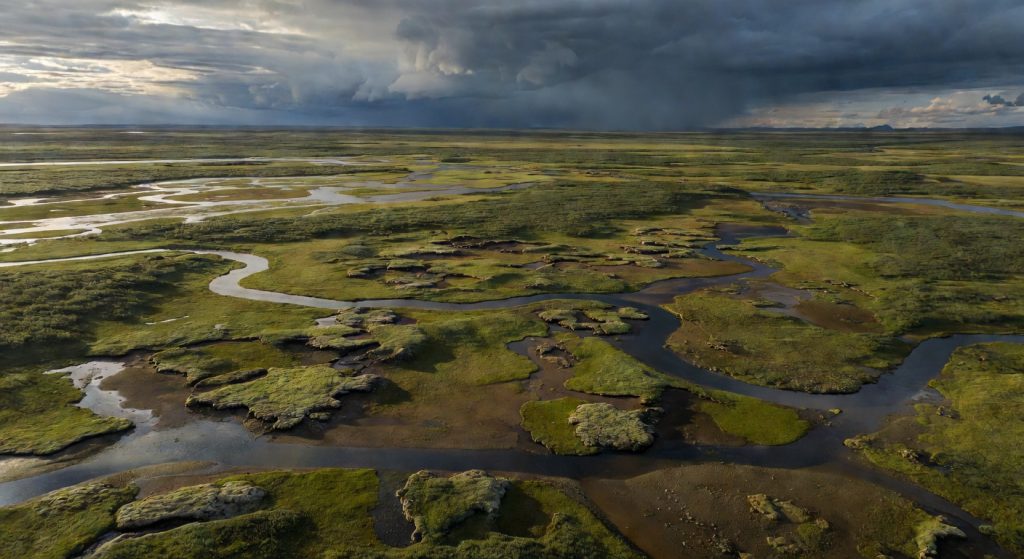
Perhaps the most unsettling development comes from the Arctic. A study published on 4 April 2025 confirms that permafrost thaw is reshaping river systems and releasing ancient carbon stored for thousands of years. As frozen ground melts, it destabilises landscapes, alters hydrology, and — critically — emits carbon dioxide and methane directly into the atmosphere, accelerating the very warming that caused the thaw in the first place.
This is a textbook climate feedback loop, and it operates largely outside human control once triggered. The implications for global carbon budgets are severe: permafrost regions store an estimated 1.5 trillion tonnes of organic carbon, roughly twice the amount currently in the atmosphere. Even a partial release would significantly undermine emissions reduction efforts made elsewhere, including Europe’s ambitious climate targets under the European Green Deal.
What This Means for Europe’s Climate Strategy
Taken together, these developments point to several urgent priorities:
- Accelerate emissions cuts now — the 2035 deadline for a 55% reduction is not a distant target; it requires transformative policy action starting immediately.
- Invest in climate resilience — El Niño forecasts and uneven regional warming patterns demand proactive adaptation in agriculture, water management, and urban infrastructure.
- Integrate natural carbon sinks into environmental policy — protecting and restoring ecosystems, including northern peatlands and forests, is essential to offsetting permafrost-driven carbon releases.
- Champion sustainable cooling — Europe’s leadership in renewable energy and energy efficiency standards can drive a global shift away from emissions-intensive cooling.
The key takeaway is simple but urgent: the science is no longer warning us about a distant future — it is describing the present trajectory. El Niño, permafrost feedback, and a widening emissions gap are not isolated phenomena; they are interconnected signals of a climate system under increasing stress. Europe has both the tools and the responsibility to lead a faster, more determined response.