EU ETS Reform, Corporate Carbon Deals, and Microplastic Rain: The Week That Defined Sustainability in 2026
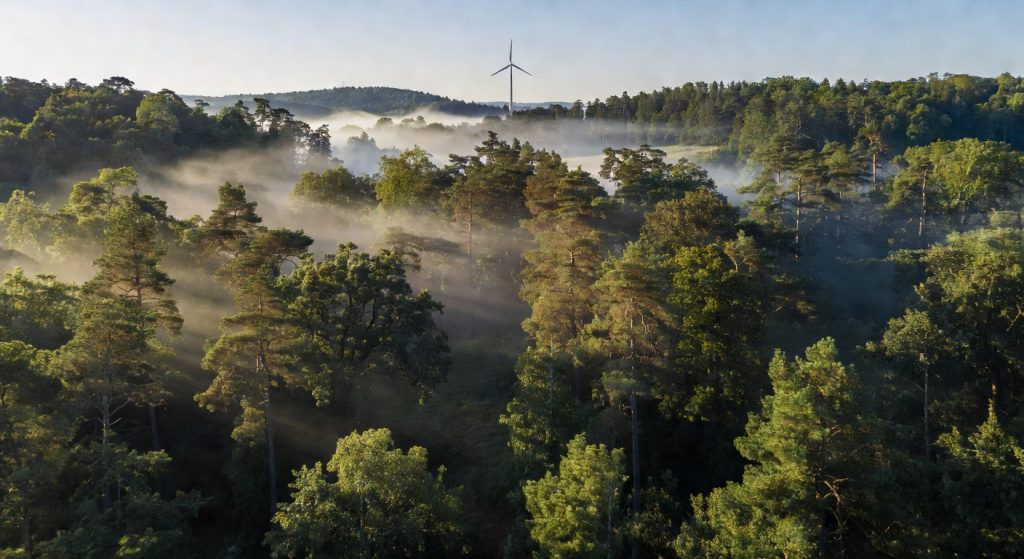
From Brussels policy chambers to Scottish wind corridors and Canadian forests, the past week delivered a cascade of sustainability developments that collectively paint a vivid picture of where Europe — and the world — stands on the road to net zero. The signals are mixed but consequential: institutional ambition is growing, corporate responsibility is scaling up, and nature is sending its own urgent warnings.
The EU Doubles Down on Carbon Pricing — And Businesses Must Adapt
The European Commission’s latest proposal to reform the Emissions Trading System (ETS) is arguably the most structurally significant move of the week. The reform aims to stabilise and strengthen the carbon market, which has historically been vulnerable to price volatility that undermines long-term investment decisions. By tightening the supply of carbon allowances and reinforcing the Market Stability Reserve, the EU is signalling that carbon pricing is not a transitional tool — it is a permanent feature of the European economy.
For businesses operating within the EU, the implications are direct. Higher and more predictable carbon prices increase the cost of inaction while rewarding early movers in decarbonisation. For sustainable finance professionals, a more robust ETS creates a clearer pricing signal that can anchor green bonds, transition finance instruments, and ESG-linked lending. The reform also carries global weight: as the EU’s Carbon Border Adjustment Mechanism (CBAM) matures, the credibility of the ETS becomes a geopolitical asset, shaping trade relationships with major emitters worldwide.
Meanwhile, Iberdrola’s commitment of $14.9 billion to rewire Scotland’s electricity grid demonstrates how private capital is already responding to the policy direction Brussels is setting. Grid modernisation is the unglamorous but indispensable backbone of the energy transition — without it, renewable energy cannot be integrated at scale. For European citizens, this investment translates into more resilient, cleaner power and, over time, lower exposure to fossil fuel price shocks.
Corporate Carbon Removal Is Scaling — But Scrutiny Must Scale With It
Microsoft’s agreement to purchase 626,000 tonnes of carbon removal from a Canadian project marks another milestone in the voluntary carbon market’s evolution. This is not a small offsetting gesture — it is a large-scale, long-duration removal deal of the kind that climate scientists argue is necessary alongside deep emissions cuts.
From a corporate responsibility standpoint, the deal reflects a maturing understanding among major corporations that net-zero commitments require investment in carbon dioxide removal, not just efficiency improvements. It also advances sustainable finance innovation by demonstrating that high-quality carbon removal can attract institutional-grade corporate buyers.
However, the green business community must apply rigorous scrutiny. Carbon removal deals are only as credible as their measurement, reporting, and verification frameworks. As the EU works to regulate voluntary carbon markets more tightly, deals like Microsoft’s will increasingly need to meet standards comparable to those applied to regulated emissions reductions. The direction is right; the governance architecture must keep pace.
Microplastics Are Falling From the Sky — The Circular Economy Cannot Wait
Perhaps the most sobering development of the week comes not from a boardroom or a legislature, but from the forest canopy. New findings confirm that microplastics are now being detected falling from the sky, contaminating remote forest ecosystems far from industrial sources. This atmospheric transport of plastic particles represents a systemic failure of the linear economy — one that no carbon market can fix on its own.
The implications span public health, agriculture, and biodiversity. Microplastics have been found in human blood, lung tissue, and now in the rainfall nourishing our forests. For the circular economy agenda, this is a clarion call: reducing plastic production and accelerating material reuse are not optional sustainability add-ons. They are urgent public health imperatives.
- EU policy: The ETS reform and CBAM signal a more muscular regulatory environment for carbon-intensive industries.
- Private investment: Iberdrola’s grid commitment and Microsoft’s carbon removal deal show corporate actors moving at meaningful scale.
- Environmental risk: Microplastic pollution in remote ecosystems underscores the limits of market mechanisms alone.
What This Means for Citizens, Businesses, and Policymakers
The convergence of these stories reveals a sustainability landscape that is simultaneously accelerating and under pressure. ESG frameworks are no longer soft commitments — they are being hardened by regulation, priced into capital markets, and tested by environmental realities that do not respect corporate reporting cycles. For decision-makers, the lesson is that ambition must be matched by implementation speed. For citizens, these developments are a reminder that the transition is both a policy project and a daily lived reality — in energy bills, air quality, and the water that falls from the sky.
Key takeaway: A stronger EU carbon market, billion-dollar grid investments, and landmark corporate removal deals show the green economy gaining structural momentum. But microplastics raining onto Europe’s forests remind us that sustainability is not only about emissions — it demands a fundamental rethink of how we produce, consume, and dispose of everything we make.