Green Hydrogen and Solar Power Lead Europe’s Clean Energy Surge in 2024
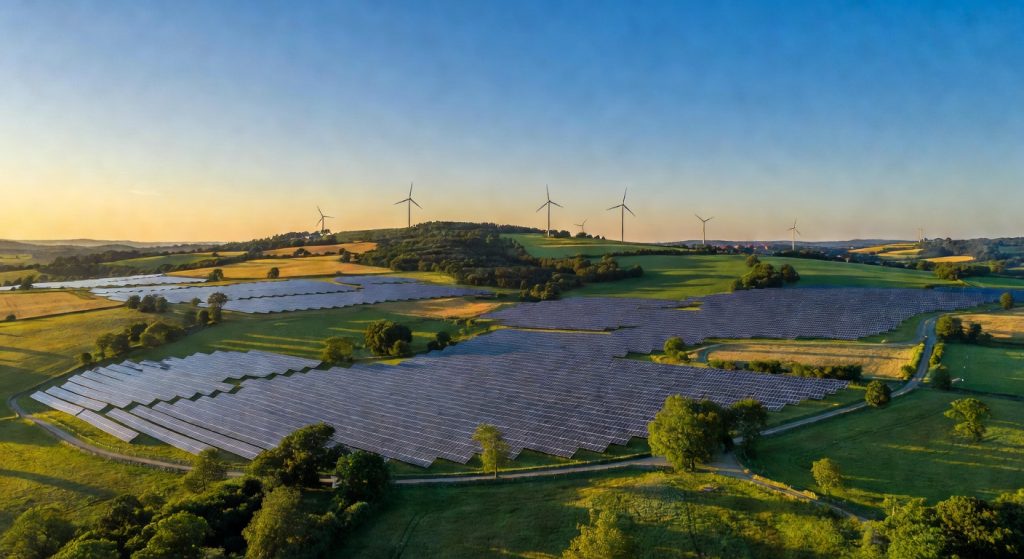
Europe’s clean energy transition is no longer a distant ambition — it is happening now, deal by deal, gigawatt by gigawatt. From the UK’s first commercial green hydrogen contracts to Germany crossing the halfway mark on its solar target, the data and the dollars are pointing in the same direction. And with 91% of new renewable energy capacity now cheaper than fossil fuels globally, according to the International Renewable Energy Agency (IRENA), the economic argument for the shift has never been stronger.
UK Bets Big on Green Hydrogen with Historic First Contracts
The United Kingdom has taken a landmark step in its hydrogen strategy by finalising long-term agreements with 10 commercial-scale green hydrogen projects through its inaugural Hydrogen Allocation Round (HAR1). These contracts — structured to provide revenue certainty for producers — are designed to unlock private investment and bring green hydrogen from pilot-scale ambition to industrial reality.
Green hydrogen, produced by splitting water through electrolysis powered by renewable energy, is widely seen as a critical tool for decarbonising hard-to-electrify sectors such as heavy industry, shipping, and long-haul transport. Unlike its grey counterpart, which relies on natural gas, green hydrogen carries no direct carbon emissions — making it a cornerstone of serious net-zero strategies.
Reinforcing this momentum, Swiss firm Smartenergy has secured €82.5 million in funding for its 100MW Orange.Bat green hydrogen project in Europe. The deal signals that institutional investors are increasingly willing to back large-scale hydrogen infrastructure, a confidence boost the sector has long needed. Together, these developments suggest that green hydrogen is finally crossing the threshold from policy aspiration to bankable asset.
Solar Power Milestones Reshape Europe’s Energy Map
While hydrogen captures headlines, solar power is quietly rewriting the energy landscape across Europe. Germany has reached the halfway point of its 2030 solar target of 215 GW — a milestone that reflects years of sustained policy support, falling panel costs, and growing citizen and business uptake. Reaching 107.5 GW of installed solar capacity places Germany among the global leaders in per-capita solar deployment, and demonstrates that ambitious national targets can be met when policy frameworks are consistent and long-term.
The UK, meanwhile, has unveiled an ambitious solar roadmap for 2030, aimed at widescale adoption across rooftops, commercial buildings, and utility-scale farms. The strategy explicitly links solar expansion to cheaper energy bills for citizens — a politically vital message at a time when energy affordability remains a top concern for households across Europe.
These solar milestones are not isolated achievements. They reflect a broader European push for energy security and resource management independence — reducing reliance on imported fossil fuels and building resilience into national grids through diversified, domestically generated renewable energy.
The Economics Are Clear: Renewables Now Outcompete Fossil Fuels
Perhaps the most consequential data point of the moment comes from IRENA: 91% of new renewable energy capacity added globally in 2023 was cheaper than fossil fuel alternatives. This is not a marginal difference — in many cases, solar and wind are now dramatically less expensive per megawatt-hour than new coal or gas plants, even without subsidies.
For businesses and decision-makers, this shift changes the calculus entirely. Investing in renewable energy is no longer primarily an ethical or regulatory choice — it is increasingly the rational economic one. For citizens, it translates into the prospect of lower energy costs over time, particularly as solar and wind require no fuel purchases and have minimal operating costs once installed.
The implications for energy efficiency and resource management are equally significant. As clean electricity becomes cheaper, electrification of heating, transport, and industrial processes accelerates — reducing waste, cutting emissions, and improving the overall efficiency of how societies use energy and water resources.
What This Means for Europe’s Clean Energy Future
The convergence of green hydrogen contracts, solar milestones, and falling renewable costs paints a picture of an energy transition that is gaining irreversible momentum. Key takeaways for stakeholders across Europe include:
- Policy certainty drives investment: The UK’s HAR1 contracts show that long-term revenue guarantees unlock private capital for emerging technologies like green hydrogen.
- Solar is a proven, scalable solution: Germany’s progress proves that national targets are achievable with sustained commitment.
- Economics now favour renewables: IRENA’s 91% figure should reshape how businesses, governments, and investors approach energy planning.
- Europe is setting the pace: From Swiss hydrogen funding to UK solar roadmaps, European actors are defining what a credible clean energy transition looks like.
The clean energy transition is no longer a question of whether — it is a question of how fast. And right now, Europe is accelerating.