Cooling Demand Could Triple by 2050: Why the World’s Air Conditioners Are Becoming a Climate Emergency
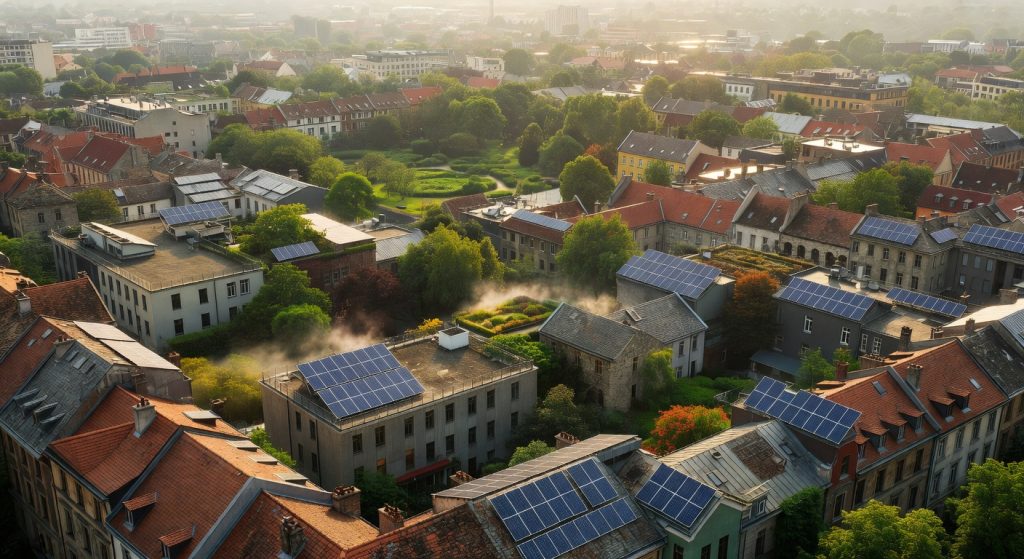
As summers grow longer and hotter across Europe and beyond, the humble air conditioner has become both a lifeline and a liability. A landmark new report from the United Nations Environment Programme (UNEP) is sounding the alarm: if current trends continue, global cooling demand could triple by 2050, potentially doubling the greenhouse gas emissions associated with keeping people cool. The Global Cooling Watch 2025, published on 11 November 2025, frames this not merely as a technical challenge but as one of the defining environmental policy crises of our generation.
A Vicious Cycle: Heat Drives Cooling, Cooling Drives Heat
The mechanics of the problem are almost cruelly circular. Population growth, rising wealth in the Global South, and increasingly extreme heat events are pushing hundreds of millions of people toward air conditioning for the first time. Yet most of the world’s cooling systems still run on fossil-fuel-generated electricity and rely on refrigerants with potent warming potential — meaning the more we cool ourselves, the hotter the planet gets.
UNEP estimates that without a decisive shift toward sustainable cooling pathways, the emissions generated by cooling alone could become a major driver of climate change in their own right. The stakes are enormous: the report calculates that failing to act could cost the global economy up to $43 trillion in damages, while leaving 3 billion people dangerously exposed to extreme heat. For Europe — where deadly heat waves have already claimed tens of thousands of lives this decade — this is not a distant threat. It is a present reality demanding urgent environmental policy responses.
Solutions exist and are well understood: transitioning to highly efficient, climate-friendly cooling technologies; integrating cooling demand into renewable energy planning; enforcing stronger building standards; and phasing out high-warming refrigerants under the Kigali Amendment to the Montreal Protocol. The barrier is not knowledge — it is political will and investment speed.
Record Greenhouse Gases and the Methane Problem
The cooling crisis does not exist in isolation. It sits within a broader, deeply worrying picture painted by two other major reports released in the same period. The WMO Greenhouse Gas Bulletin confirmed that 2024 saw CO₂, methane, and nitrous oxide all reach record atmospheric concentrations, driven by human emissions, widespread wildfires, and the weakening capacity of natural carbon sinks such as forests and oceans. This is not a plateau — it is an acceleration.
Meanwhile, UNEP’s An Eye on Methane 2025 report offers a sobering update on one of the most tractable near-term levers for slowing warming. Satellite monitoring has improved dramatically, allowing governments and industry to be alerted to major methane leaks in near real time. Yet the response rate remains strikingly low: only 12% of alerts triggered meaningful government or industry action. Methane is responsible for roughly 30% of current warming, and scientists estimate that cutting methane emissions aggressively by 2030 could deliver the fastest measurable slowdown in near-term temperature rise. The technology and the data are there. The follow-through is not.
Institutional Strain and the Risk of a Policy Vacuum
Compounding these scientific warnings is a troubling fragility in the institutions designed to coordinate the global response. The IPCC — the Intergovernmental Panel on Climate Change, whose assessment reports underpin virtually all international climate and biodiversity policy — is facing internal procedural disputes and serious funding shortfalls. While the panel insists its major reports remain on schedule, the uncertainty is a red flag for policymakers and conservationists alike who depend on its authoritative synthesis of climate science.
In the United States, shifting federal priorities are creating additional turbulence. The EPA’s decision to flag microplastics as priority water contaminants — signalling potential new pollution control regulations — reflects genuine public health concern, but broader US climate policy coherence remains uncertain, with ripple effects for international cooperation and business investment decisions on both sides of the Atlantic.
What This Means for Europe and Its Citizens
For European citizens, professionals, and decision-makers, these converging trends carry clear implications:
- Energy policy: Cooling must be integrated into EU renewable energy and building renovation strategies — the Energy Performance of Buildings Directive is a critical vehicle.
- Business risk: Companies in construction, real estate, manufacturing, and water sectors face tightening environmental policy and shifting regulatory landscapes.
- Public health: Urban heat island effects and pollution — including microplastics — are direct citizen health issues requiring local and national action.
- Global leadership: With international climate bodies under strain, Europe has both the opportunity and the responsibility to anchor global environmental coordination.
The key takeaway is stark: the window to decouple cooling from carbon, rein in methane, and stabilise greenhouse gas concentrations is narrowing rapidly. The science is unambiguous. What 2025 is testing is whether policy, investment, and collective will can move at the speed the planet requires.