Arctic Ice Is Vanishing Faster Than Expected — And the World Is Running Out of Time to Respond
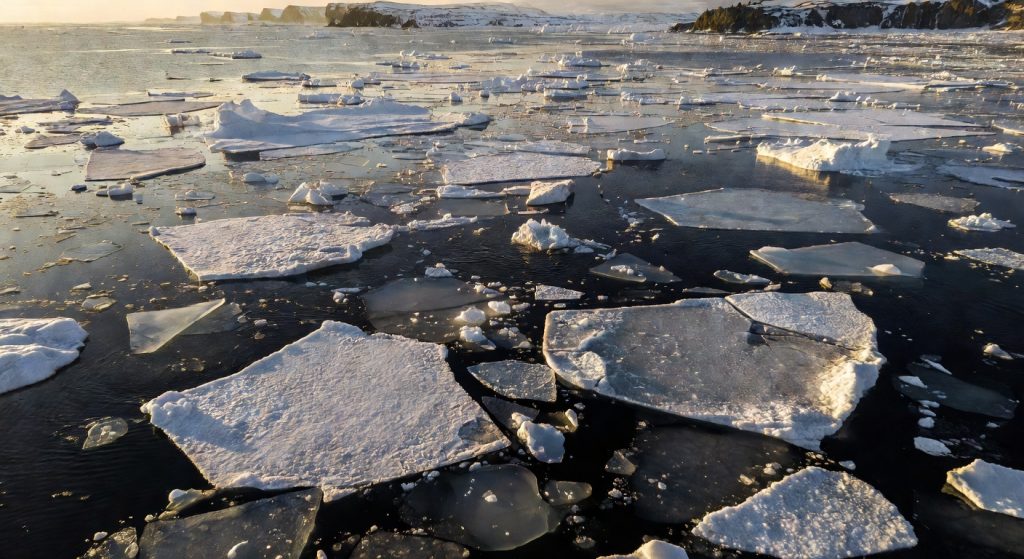
The ice is disappearing — and it is doing so faster than our best models predicted. New research published in April 2026 reveals that stable coastal sea ice along Alaska’s shoreline is forming later each autumn and breaking up earlier each spring, compressing the ice season by weeks or even months. This is not a distant warning. It is a measurable, accelerating reality with consequences that ripple from Arctic ecosystems all the way to European energy markets and global climate policy.
A Feedback Loop We Can No Longer Ignore
Coastal sea ice in Alaska serves as a natural buffer — protecting shorelines from erosion, supporting marine biodiversity, and sustaining the livelihoods of Indigenous and local communities that depend on stable ice for fishing, hunting, and transport. As climate change strips away this protection faster than models anticipated, the consequences compound. Less ice means more open water, which absorbs more solar heat, which accelerates warming further — a feedback loop that threatens conservation efforts across the entire Arctic region.
The loss is not only ecological. Local businesses built around predictable ice seasons are facing existential uncertainty. Coastal infrastructure, already under pressure from rising seas, loses a critical line of natural defence. And the biodiversity that depends on sea ice — from polar bears to ice-dependent fish species — faces shrinking habitat with little room to adapt.
From a European perspective, Arctic destabilisation is far from a regional issue. Disruptions to the Arctic system influence jet stream patterns, affect North Atlantic fisheries, and accelerate global sea level rise — all of which carry direct implications for European coastal nations, environmental policy planning, and EU climate adaptation strategies.
The Emissions Gap: Policy Is Still Falling Dangerously Short
The accelerating ice loss arrives against a backdrop of persistent policy failure. The UNEP Emissions Gap Report 2025 delivers a stark verdict: even if all current Paris Agreement pledges are fully implemented, global temperatures are still projected to reach 2.3–2.5°C above pre-industrial levels. To keep the 1.5°C limit alive, the world must cut emissions by 55% by 2035 — a target that demands immediate, structural transformation of energy systems, industry, and land use.
Meanwhile, a parallel crisis is building in plain sight. The UNEP Global Cooling Watch 2025 projects that global cooling demand will triple by 2050, potentially doubling energy-related emissions unless a Sustainable Cooling Pathway is adopted. The alternative — a rapid shift toward efficient, renewable energy-powered cooling systems — could save an estimated $43 trillion and protect 3 billion people from dangerous heat exposure. For European policymakers already navigating energy security and the green transition, this represents both a challenge and a significant industrial opportunity.
Climate Inequity: The Unequal Burden of a Shared Crisis
Perhaps the most morally urgent dimension of the current data is this: the countries least responsible for historical emissions are bearing the heaviest costs. Research indicates that poor countries face up to ten times more heat-related deaths by 2050 than wealthy nations. This is not an abstract statistic — it reflects a profound failure of global climate justice that European environmental policy cannot afford to sideline.
Addressing this inequity requires more than pledges. It demands concrete financial flows for adaptation, technology transfer for clean cooling and renewable energy infrastructure, and an end to the pattern in which climate pollution generated by wealthy economies is paid for in lives lost elsewhere.
Implications for Citizens, Businesses, and Decision-Makers
- Citizens across Europe and beyond will face rising energy costs and heat stress unless cooling systems are rapidly decarbonised.
- Businesses in coastal, agricultural, and energy sectors must factor accelerating climate risks into long-term planning — the transition costs of acting now are far lower than the costs of inaction.
- Decision-makers need to close the gap between climate pledges and enforceable policy, with particular urgency on emissions reduction timelines and adaptation funding for vulnerable nations.
The key takeaway is simple, if uncomfortable: the window for orderly, managed climate action is narrowing faster than the models told us. Alaska’s vanishing ice is a visible symptom of a systemic crisis that demands a systemic response — from Arctic conservation to European energy policy to global climate equity. The science is no longer ahead of events. Events are catching up with the science.