US Pays $928 Million to Kill Offshore Wind: What It Means for ESG and the Energy Transition
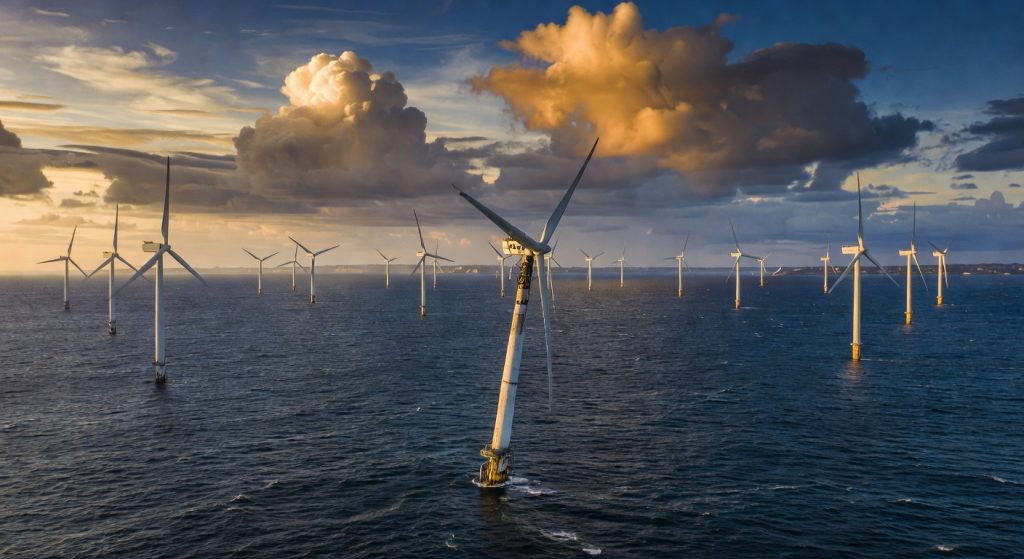
In a move that has sent shockwaves through the global sustainable finance community, the Trump administration’s Interior Department has agreed to reimburse French energy giant TotalEnergies $928 million — the full amount the company paid for federal offshore wind leases off the coasts of New York and North Carolina. The condition? That TotalEnergies redirect those investments toward oil and gas projects in the United States, primarily in Texas. The deal, announced in late March 2026, is more than a policy reversal. It is a stress test for ESG frameworks, corporate responsibility commitments, and the resilience of the global energy transition.
A Billion-Dollar Signal Against the Green Economy
The TotalEnergies agreement is unprecedented in scale and symbolism. Never before has a federal government effectively paid a private company to abandon renewable energy in favour of fossil fuel development. The $928 million reimbursement represents public money used not to accelerate the clean energy transition, but to reverse it — at a moment when the Intergovernmental Panel on Climate Change continues to warn that every fraction of a degree of warming carries measurable human cost.
From a sustainable finance perspective, the implications are deeply unsettling. TotalEnergies had positioned those offshore wind leases as part of its broader low-carbon strategy, a cornerstone of the ESG narrative it presented to European institutional investors. The company’s willingness to abandon those assets — even when compensated — raises legitimate questions about the depth of corporate sustainability commitments when political and financial winds shift. For ESG analysts and responsible investment funds, this is precisely the kind of governance and strategy risk that materiality assessments are designed to flag.
Geopolitical Turbulence Is Reshaping Energy Markets — and ESG Calculations
The TotalEnergies deal does not exist in a vacuum. It coincides with one of the most volatile moments in global energy markets in decades. The escalating US-Israel conflict with Iran has triggered what analysts are describing as the largest supply disruption in oil market history, with Iran blocking the Strait of Hormuz — a chokepoint through which an estimated 20 to 25 percent of global oil supply normally flows. Energy security has surged back to the top of the political agenda, and governments on both sides of the Atlantic are under pressure to prioritise supply stability over decarbonisation timelines.
This geopolitical context is being used to justify a return to fossil fuel investment, but European policymakers and sustainability professionals should be cautious about accepting that framing uncritically. The energy crisis of 2022 — triggered by Russia’s invasion of Ukraine — demonstrated that dependence on fossil fuel imports is itself a profound energy security risk. The European Union’s response at the time was to accelerate renewables deployment, not retreat from it. The lesson remains valid: a diversified, domestically generated clean energy system is more resilient, not less, than one tied to geopolitically exposed supply chains.
What This Means for European Businesses and Sustainable Investing
For European companies and investors, the TotalEnergies episode is a reminder that regulatory and political risk must be priced into every green business strategy. The EU’s Corporate Sustainability Reporting Directive (CSRD) and the broader sustainable finance taxonomy were designed, in part, to create a stable, credible framework that insulates long-term investment decisions from short-term political volatility. That framework is now being tested by diverging transatlantic approaches to climate policy.
Meanwhile, the compliance landscape continues to evolve rapidly. In the United States, California’s SB 253 requires large companies to report Scope 1 and Scope 2 emissions by August 2026 — the first mandatory climate disclosure rule of its kind in the US. Scope 3 reporting requirements follow in 2027, affecting supply chains that touch over 100,000 companies globally. European multinationals operating in California must prepare accordingly, while also navigating CSRD obligations at home.
The key implications for sustainability and ESG professionals include:
- Greenwashing risk is rising: When major energy companies reverse clean energy commitments under political pressure, the credibility of corporate sustainability pledges comes under scrutiny.
- Regulatory divergence demands agility: Companies operating across jurisdictions face increasingly fragmented compliance requirements — from California’s disclosure rules to the EU taxonomy.
- Supply chain transparency is non-negotiable: Scope 3 accountability is becoming a legal requirement, not just a reputational choice.
- Nature and forests are gaining financial recognition: COP30 in Brazil has established the Tropical Forests Forever Facility (TFFF), a new instrument rewarding conservation and Indigenous land stewardship — expanding the frontier of sustainable finance.
The Takeaway: Resilience Requires More Than Commitments
The $928 million TotalEnergies deal is a cautionary tale for anyone who assumed that corporate ESG commitments were irreversible. Sustainability strategies must be embedded in governance structures, financial incentives, and binding regulatory frameworks — not left vulnerable to the next political cycle. For Europe, this is both a warning and an opportunity: to lead by example, to deepen the integrity of its sustainable finance architecture, and to demonstrate that the green economy is not a fair-weather project, but the only credible long-term path forward.