Clean Energy Momentum Holds Firm Despite U.S. Federal Rollbacks in 2026
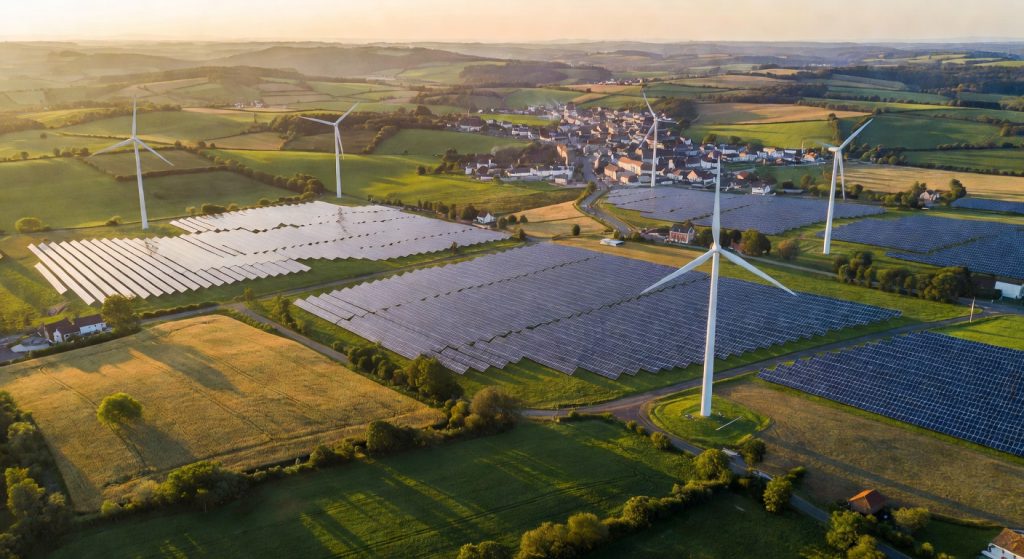
The global energy transition has rarely looked more contradictory. In early 2026, the United States federal government delivered one of the most significant rollbacks in the history of environmental policy: the repeal of the 2009 Greenhouse Gas Endangerment Finding by the EPA. Yet at the same moment, clean energy investment is accelerating across U.S. states, Europe, and emerging markets — suggesting that the structural shift away from fossil fuels has developed a momentum that political headwinds alone cannot reverse.
A Major Setback: What the EPA Rollback Actually Means
On February 12, 2026, the U.S. Environmental Protection Agency formally repealed the 2009 GHG Endangerment Finding — the legal cornerstone that had underpinned federal vehicle emission standards and a broad range of climate change regulations for over fifteen years. Without this finding, the federal government loses its primary statutory basis for regulating carbon dioxide and other greenhouse gases from cars, trucks, and power plants.
From a European perspective, the implications are significant. The EU has long relied on a degree of transatlantic coordination on climate change targets to maintain competitive parity in industries like automotive manufacturing. A U.S. federal retreat could intensify pressure on European carmakers already navigating the transition to electric vehicles, while also complicating international climate diplomacy ahead of future COP negotiations.
However, the federal rollback does not tell the whole story of the United States. More than 20 U.S. states with clean electricity or net-zero targets are pressing ahead independently, demonstrating that sub-national actors have become indispensable pillars of global environmental policy.
States and Cities Step Into the Void — With Real Numbers
Eight U.S. governors used their 2026 State of the State addresses to announce concrete plans for renewable energy expansion and energy cost reduction. The most striking commitment came from Massachusetts Governor Maura Healey, who signed an executive order targeting:
- 4 gigawatts of new in-state solar generation within ten years
- 5 gigawatts of battery storage capacity over the same period
- Projected savings of an estimated $10 billion in energy bills for residents and businesses
These figures matter beyond their local context. They illustrate a pattern visible across Europe as well: that renewable energy is increasingly framed not as an environmental sacrifice, but as an economic opportunity and an energy security strategy. The governors of Arizona, Illinois, Maryland, New Jersey, Pennsylvania, Virginia, and Wisconsin are making similar arguments — that clean energy infrastructure lowers costs, creates jobs, and reduces exposure to fossil fuel price volatility.
Europe and the World: Proof Points Accumulating
The European dimension of this story is one of vindication. Spain has doubled its solar and wind capacity over the past six years, and the country’s energy system proved notably more resilient during recent periods of global fossil fuel price instability. This is precisely the argument European policymakers have been making since the 2022 energy crisis: that investing in renewable energy is inseparable from energy sovereignty.
Meanwhile, the United Kingdom has responded to ongoing energy security concerns by accelerating its renewable energy auction programme, backing approximately 190 clean energy projects in the latest round. The UK has also finalised new sustainability reporting standards aligned with international frameworks, requiring companies to disclose consistent climate and sustainability data — a move that strengthens conservation of financial credibility around green claims and helps combat greenwashing.
Beyond Europe, Mexico is receiving a $500 million investment in electric vehicles and charging infrastructure, signalling that the EV transition is expanding well beyond wealthy economies. Reducing transport-related pollution in rapidly urbanising countries is one of the highest-leverage interventions available for global air quality and climate change mitigation simultaneously.
Implications for European Decision-Makers
For European citizens, professionals, and policymakers, the current moment calls for clarity over alarm. The U.S. federal retreat creates genuine risks — in trade, in diplomatic leverage, and in the global carbon pricing landscape. But it also creates openings: European clean technology exporters, sustainability consultancies, and environmental policy frameworks are increasingly positioned as global reference points.
The EU’s challenge is to maintain the integrity of its own commitments — on biodiversity, on pollution reduction, on renewable energy targets — while building coalitions with the states, cities, and countries that remain committed to the transition regardless of what Washington decides.
Key takeaway: The repeal of the U.S. EPA’s Endangerment Finding is a serious setback for federal climate governance, but it has not stopped the clean energy transition — it has simply redistributed leadership. Europe, U.S. states, and emerging markets are filling the gap with investment, policy, and infrastructure. The transition is messier than hoped, but it is not reversing.