Hottest Decade on Record: What the UN WMO Report Means for Climate Policy in 2026
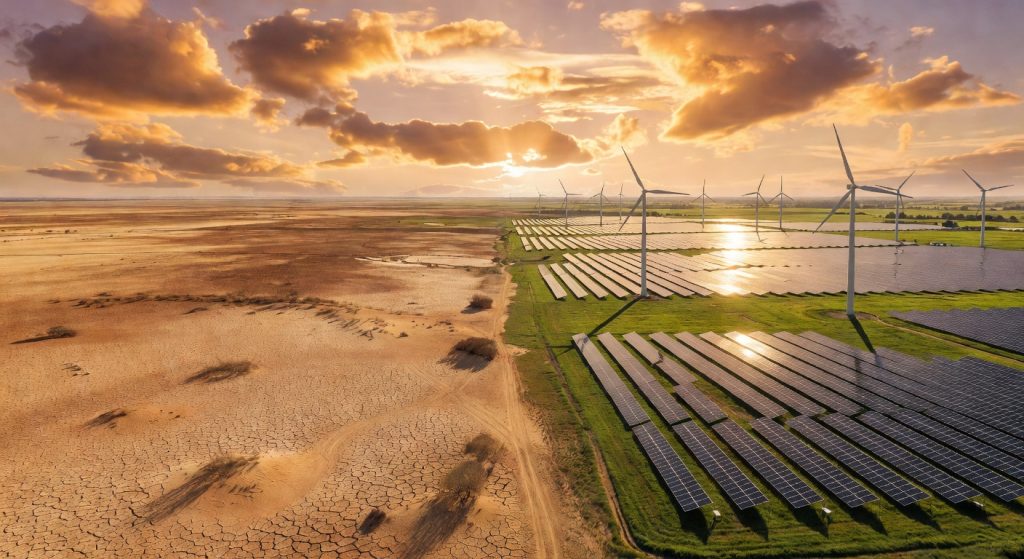
The numbers are in, and they are stark. The World Meteorological Organization (WMO) has officially confirmed that the decade between 2015 and 2025 was the hottest ever recorded in human history. Its latest State of the Global Climate report warns that Earth is being “pushed beyond its limits” — a phrase that should resonate far beyond scientific circles and land squarely on the desks of policymakers, business leaders, and citizens alike. For Europe, which has already experienced record-breaking heatwaves, devastating floods, and accelerating biodiversity loss, this report is not a distant alarm. It is a confirmation of what many are already living.
A Planet Under Pressure: What the WMO Data Tells Us
The WMO report documents rapid, large-scale climate changes with consequences that will unfold across generations. Rising global temperatures are driving not only extreme weather events but also long-term disruptions to ecosystems, water cycles, and food systems. The findings reinforce what climate scientists have warned for decades: climate change is no longer a future threat — it is the defining environmental reality of our time.
From a European perspective, this data aligns with regional observations. The EU’s Copernicus Climate Change Service has consistently reported above-average temperatures across the continent, while marine heatwaves in the Mediterranean are threatening marine biodiversity and coastal livelihoods. Pollution of air and water, compounded by rising temperatures, is placing additional stress on already fragile ecosystems. The WMO report makes clear that without immediate and sustained action on emissions reduction, renewable energy deployment, and conservation, these trends will only intensify.
Policy Divergence: US Federal Rollbacks vs. Subnational Momentum
While the science demands urgent global cooperation, the political landscape remains deeply fragmented — nowhere more visibly than in the United States. The Trump administration has proposed a $1 billion settlement to cancel offshore wind projects with TotalEnergies, a move that signals a clear prioritisation of fossil fuels and natural gas over renewable energy development. Legal challenges are mounting, with courts dismissing national security justifications for the cancellations.
Yet beneath the federal level, a different story is emerging. More than 20 US states are advancing clean electricity targets and net-zero commitments independently of Washington. Eight governors — from Arizona to Wisconsin — have announced coordinated plans for energy bill relief, renewable expansion, and regulation of data centre energy consumption. Massachusetts alone is targeting 4 GW of solar capacity and 5 GW of battery storage, projections that could save residents an estimated $10 billion in energy bills. This subnational resilience is a critical reminder that environmental policy does not live or die solely at the federal level.
For European observers, this dynamic is instructive. The EU’s own Green Deal architecture — built on binding targets, carbon pricing, and sustainability reporting — offers a more integrated model. But it also faces internal political pressures, with some member states pushing to slow the pace of transition. The lesson from the US is clear: when national leadership falters, regional and local actors must fill the gap.
Sustainability Standards and the Corporate Accountability Shift
Beyond government policy, the private sector is facing growing demands for transparency on environmental impact. Two significant developments mark this shift. First, the Alliance for Water Stewardship released Version 3.0 of its International Water Stewardship Standard on 18 March 2026, strengthening alignment between water management, climate resilience, and EU reporting directives — a direct response to growing corporate disclosure requirements under European sustainability law.
Second, the UK has accelerated its renewable energy auction programme and finalised sustainability reporting standards aligned with international frameworks, positioning itself as a post-Brexit leader in green finance and environmental governance. These moves reflect a broader global trend: sustainability reporting is transitioning from voluntary best practice to regulatory obligation, particularly for companies operating in or trading with the European market.
Implications for Europe and the Path Forward
The WMO report, combined with these policy and regulatory developments, points to a clear set of priorities for European decision-makers and businesses:
- Accelerate renewable energy deployment to meet climate targets and reduce dependence on imported fossil fuels.
- Strengthen biodiversity and conservation frameworks to protect ecosystems already stressed by pollution and rising temperatures.
- Invest in water stewardship as climate change reshapes precipitation patterns across the continent.
- Align corporate sustainability reporting with evolving EU and international standards to ensure accountability and investor confidence.
- Support subnational and civil society actors driving climate action where national policy falls short.
The key takeaway is simple but urgent: the hottest decade on record is not a statistical anomaly — it is a trajectory. Reversing it requires the kind of coordinated, ambitious environmental policy that Europe has the frameworks to deliver. The WMO has confirmed the diagnosis. The treatment is already known. What remains is the political and collective will to apply it — without delay.