Climate Policy in 2026: How Europe, the UK, and US States Are Reshaping the Green Transition
The global response to climate change is rarely a straight line. In early 2026, a familiar pattern is playing out: while federal-level ambition in some countries stalls or reverses, cities, states, corporations, and international bodies are quietly — and sometimes boldly — filling the gap. The latest wave of environmental policy developments reveals a patchwork of progress that is both encouraging and instructive, particularly for European citizens and decision-makers watching the transition unfold.
The UK Sets a New Bar for Corporate Climate Transparency
One of the most significant recent developments in environmental policy comes from the United Kingdom, where sustainability reporting standards have been finalized and aligned with international frameworks. These rules require companies to disclose consistent, investor-grade climate and sustainability data — a move that mirrors and reinforces the EU’s own Corporate Sustainability Reporting Directive (CSRD).
This matters beyond British borders. As the EU and UK increasingly harmonize their approaches to ESG disclosure, multinational companies operating across Europe face growing pressure to treat climate risk as a core business metric, not a footnote. Investors, regulators, and civil society are all watching.
Simultaneously, the UK government has accelerated renewable energy auctions in response to energy security concerns linked to the ongoing Middle East crisis, backing approximately 190 clean energy projects. The message is clear: renewable energy is no longer just an environmental imperative — it is a strategic and economic one.
US States Step Up Where Washington Steps Back
Across the Atlantic, the picture is more fragmented — but far from bleak. Despite significant federal rollbacks on climate regulation, more than 20 US states are maintaining clean electricity or net-zero targets, demonstrating that sub-national actors can sustain momentum even when national policy retreats.
New York lawmakers have advanced legislation requiring large companies to disclose greenhouse gas emissions starting in 2028, while California has set August 2026 as the deadline for emissions reporting under Senate Bill 253. These state-level mandates, covering some of the world’s largest economies, send a powerful signal to global supply chains and corporate boardrooms alike.
For European observers, this is both reassuring and strategically relevant. US companies operating in the EU — or seeking access to European capital markets — will increasingly need to meet disclosure standards that converge with CSRD and the EU Taxonomy, regardless of Washington’s stance on climate policy.
Renewable Energy and Water: The Quiet Revolutions
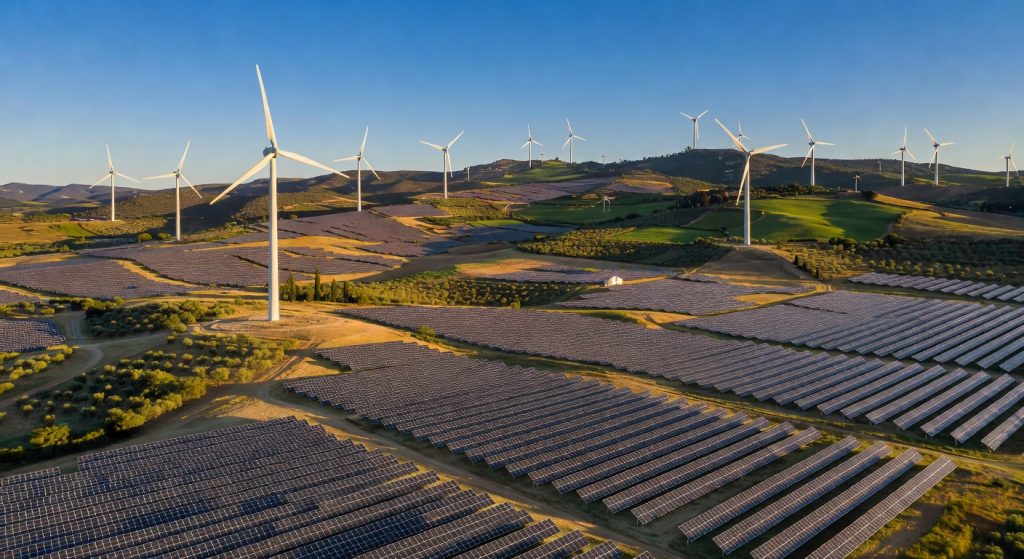
Beyond policy headlines, two quieter but equally important trends deserve attention. In Spain, solar and wind capacity has doubled over the past six years, providing a compelling real-world case study in economic resilience. As fossil fuel prices remain volatile — amplified by geopolitical instability — Spain’s renewable buildout has insulated households and businesses from the worst price shocks, reinforcing the argument that the green transition is also a financial hedge.
Meanwhile, the Alliance for Water Stewardship has released Version 3.0 of its International Water Stewardship Standard (March 18, 2026), with clearer alignment to climate goals and EU sustainability reporting directives. Water is increasingly recognized as a frontline issue in climate adaptation — from drought resilience in Southern Europe to flood management in the North — and this updated standard gives companies a more robust framework for addressing water-related risks.
On the corporate side, over 12,800 companies are now working to cut emissions through Science Based Targets initiative (SBTi) commitments, signalling that private sector engagement with climate change is deepening, even as political cycles shift.
What This Means for Europe’s Green Agenda
The broader implication of these developments is that the architecture of climate action is becoming more distributed and more resilient. No single government or institution holds all the levers. Instead, progress is being driven by a combination of:
- Regulatory convergence between the EU, UK, and progressive US states on climate disclosure
- Energy security imperatives accelerating renewable deployment beyond purely environmental motivations
- Corporate accountability through science-based targets and mandatory reporting
- Emerging standards on biodiversity, water stewardship, and pollution that extend the sustainability agenda
For European citizens and policymakers, the takeaway is both a challenge and an opportunity: the EU’s regulatory leadership on environmental policy is shaping global norms, but maintaining that leadership requires consistent implementation, ambitious enforcement, and continued investment in the clean energy infrastructure that makes the transition real.
The green transition is not waiting for perfect political conditions. It is being built, piece by piece, in capitals, boardrooms, and energy grids around the world.