NASA’s X-59 Project Aims to Revolutionize Quiet Supersonic Travel by 2026
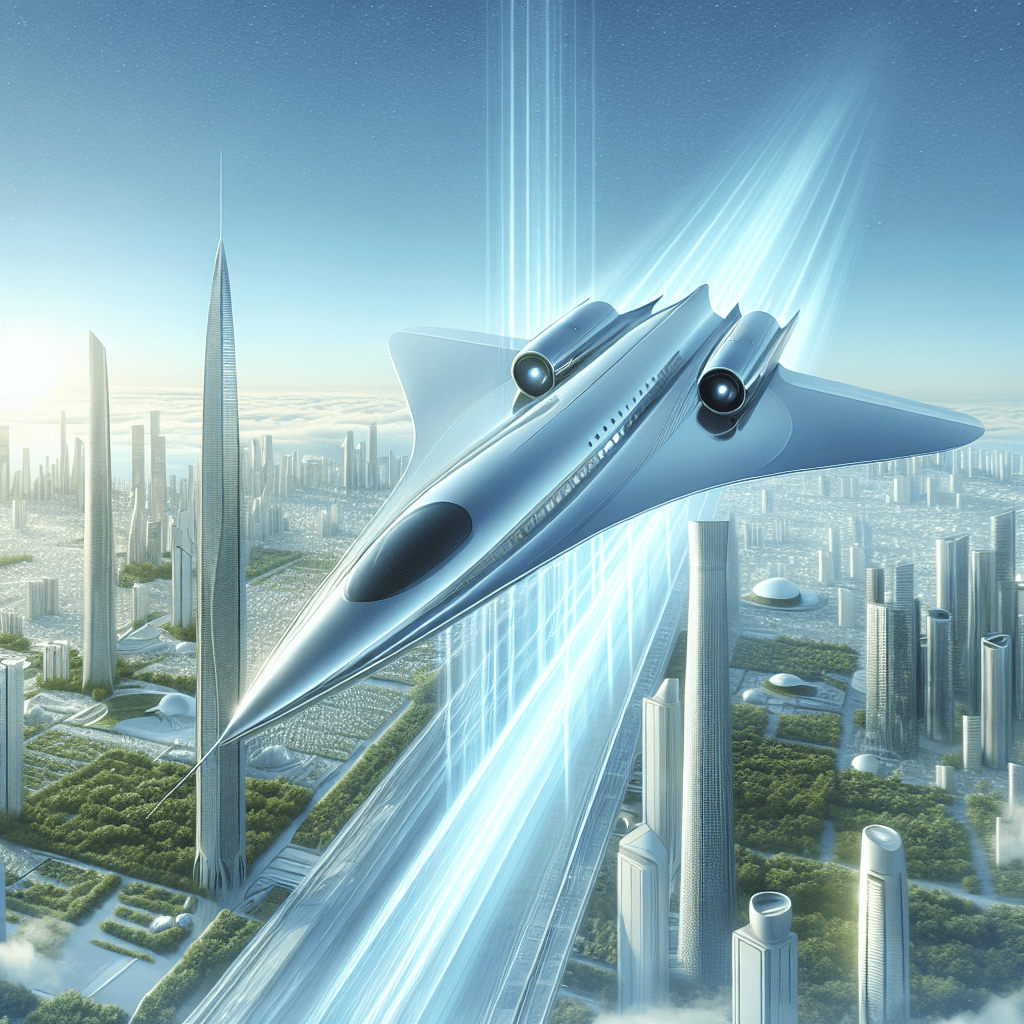
High-Speed Flight Project Overview
In 2026, NASA’s high-speed flight initiatives are accelerating, with the X-59 QueSST project leading efforts to enable quiet supersonic travel over land, alongside emerging hypersonic research and supporting technologies.[1][3][5] These programs aim to overcome decades-old sonic boom restrictions, potentially revolutionizing commercial aviation by allowing speeds exceeding 1,100 km/h without excessive noise.[1]
The X-59: Pioneering Quiet Supersonic Flight
NASA’s flagship Quiet Supersonic Technology (QueSST) project centers on the X-59 aircraft, developed in partnership with Lockheed Martin Aeronautics under a $247 million contract.[1] Designed as an experimental technology demonstrator, the X-59 seeks to produce a “quiet sonic thump” rather than the disruptive booms that have banned overland supersonic flights since 1947.[1] By reshaping the aircraft’s contours, engineers prevent shock waves from coalescing, spreading pressure changes to minimize noise.[1]
Advances in supercomputing have been pivotal, enabling precise modeling of airplane shapes and surrounding fluid dynamics—far beyond what wind tunnel tests could achieve alone.[1] Jay Brandon, NASA’s chief engineer, notes that these simulations capture realistic flight conditions, predicting low-boom performance accurately.[1] The aircraft cruises at 55,000 feet, with public feedback on its noise levels slated to begin in 2026, gauging acceptability for lifting the supersonic ban.[1][4]
Supporting this, NASA has repurposed F-15 Eagles for high-altitude research under the Flight Demonstrations and Capabilities project.[5] Modified to operate safely at 60,000 feet, these jets will test conditions mimicking the X-59’s envelope, providing data on supersonic propagation.[5] Greg Ulmer of Lockheed Martin hails the X-59 as a potential aviation game-changer, paving the way for commercialization if regulations evolve.[1]
Hypersonic Flight: The Next Frontier
Beyond supersonic, NASA is investing in hypersonic flight—speeds of Mach 5 or greater—to bridge ground tests and real-world applications.[3][9] In August of the prior year, NASA awarded contracts to SpaceWorks Enterprises ($500,000) and Stratolaunch ($1.2 million) for six-month studies on reusable test platforms.[3] SpaceWorks focuses on modifying its X-60 vehicle, while Stratolaunch targets the Talon-A, emphasizing affordable, high-cadence flight testing.[3][9]
These efforts address the challenges of hypersonic vehicles, which demand rapid prototyping to validate materials and aerodynamics under extreme heat and speed.[9] As of early 2026, this positions the U.S. to lead in hypersonic aviation, complementing supersonic advancements.[3]
Broader 2026 High-Speed Landscape
While NASA dominates, global activity underscores high-speed flight’s momentum. No major spaceflight launches directly tie to atmospheric high-speed projects, but related milestones like Stoke Space’s Nova (early 2026) hint at reusable tech synergies.[2] China’s Mengzhou spacecraft tests and Long March 10A rocket also advance high-performance propulsion, indirectly benefiting aviation.[2]
Emerging concepts include Electra.aero’s EL9 hybrid-electric regional aircraft for ultra-short takeoffs, blending efficiency with speed potential.[7] Videos highlight 2026-launched “flying cars” like the Flight JetBike and XPeng AeroHT, though these prioritize urban mobility over sustained high-speed cruise.[8] Small airships from Small Airship Technologies offer niche payload transport, viable for 10-100 kg ranges in surveillance roles.[6]
Potential Impacts and Challenges
Supersonic revival could slash transcontinental times—New York to Los Angeles in under an hour—boosting commerce and connectivity.[1] Hypersonics promise even faster global links, with economic ripple effects.[3]
Yet hurdles persist. Environmental concerns include fuel burn, emissions, and residual noise impacts on wildlife and communities, even if muted.[1] Regulatory changes are essential; the U.S. ban on overland supersonic flight must be revisited based on X-59 data.[1] Hypersonic tests require overcoming thermal barriers and cost barriers for scalability.[9]
| Aspect | Supersonic (X-59) | Hypersonic (X-60/Talon-A) |
|---|---|---|
| Speed | >1,100 km/h (Mach 1.4) | ≥Mach 5 [3] |
| Key Goal | Quiet boom for overland flights [1] | Reusable ground-to-flight testing [3][9] |
| Partners | Lockheed Martin, F-15 ops [1][5] | SpaceWorks, Stratolaunch [3] |
| 2026 Milestone | Public noise feedback [1][4] | Study completions [3] |
| Challenges | Regulation, noise acceptance [1] | Affordability, heat management [9] |
Looking Ahead
As of March 2026, these projects signal a transformative era. The X-59’s flights could validate quiet supersonic viability, while hypersonic studies lay groundwork for Mach 5+ travel.[1][3] Success hinges on data from 2026 tests, public input, and policy shifts. If achieved, high-speed flight promises shorter journeys and new industries, balanced against sustainability demands. Stakeholders from NASA to startups are united in pushing boundaries, with supercomputing and collaborations driving progress.[1][3]
(Word count: 812)
Original source: NASA – Breaking News – High-Speed Flight Project Overview