Floating Data Centers Surpass Space Solutions: Harnessing Seas for Sustainable, Scalable Tech Infrastructure
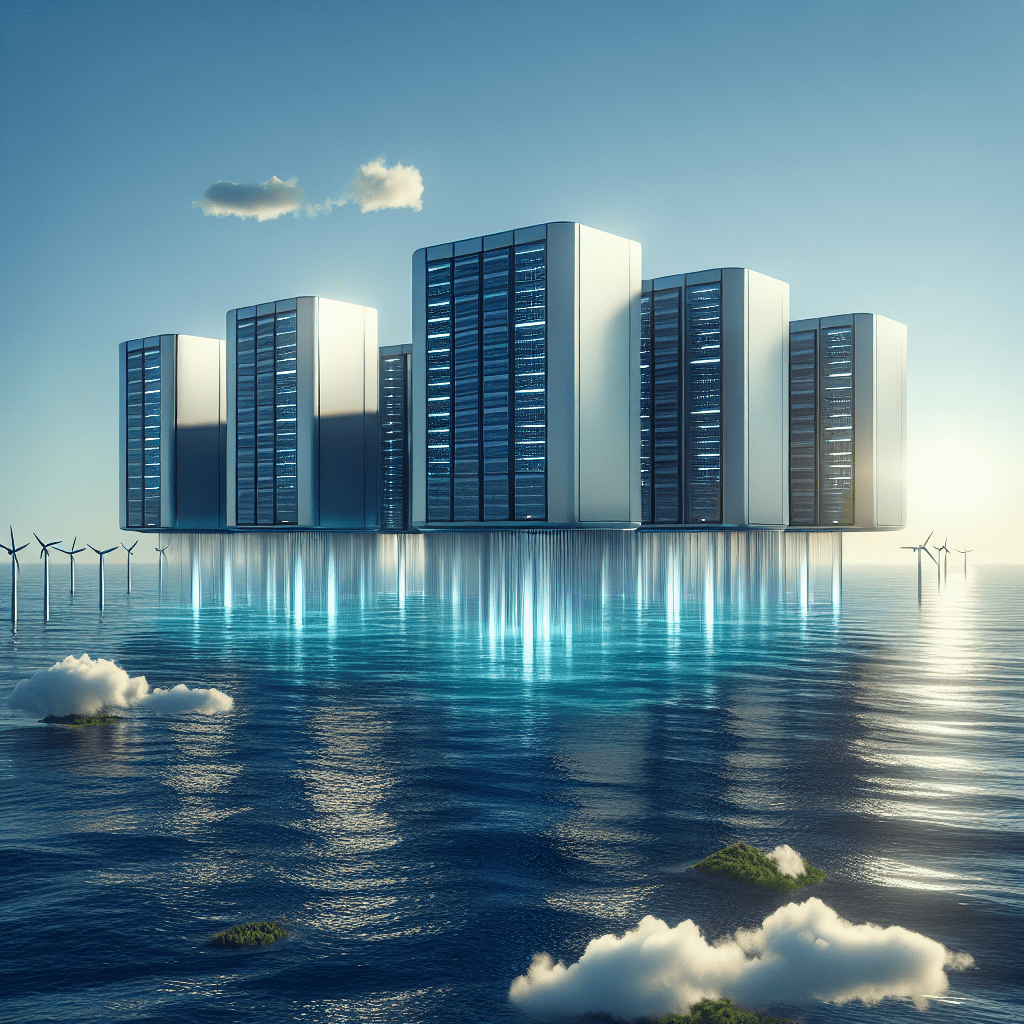
Who Needs Data Centers in Space When They Can Float Offshore?
In an era of exploding data demands from AI, cloud computing, and streaming, space-based data centers sound futuristic—but floating offshore facilities are delivering real-world advantages today, from free seawater cooling to rapid deployment.[1][2]
The Shift from Stars to Seas
Global data infrastructure faces massive challenges: land scarcity, water shortages, grid overloads, and community pushback against new builds.[2] While orbital data centers promise passive radiative cooling, their rocket-launch costs and unproven scalability keep them conceptual.[1] Enter floating offshore data centers—buoyant platforms housing server racks, anchored to the seabed or using dynamic positioning, linked by subsea fiber optics.[1] These leverage maritime engineering for practical wins over both land and space alternatives.
Microsoft’s Project Natick proved the concept in 2018, submerging a capsule off Scotland for two years. It achieved higher reliability than land-based centers, thanks to cold seawater enabling free cooling that slashes energy use.[1] By 2026, projects like the operational Stockton, California facility—designed by Elliott Bay Design Group (EBDG)—demonstrate viability at 10-12MW scales.[2]
Key Advantages of Offshore Floating Centers
Floating data centers turn ocean challenges into strengths. Here’s why they’re gaining traction:
- Superior Cooling: Surrounding seawater provides an unlimited, non-evaporative cooling source, unlike land centers guzzling freshwater. This cuts the energy typically eaten by cooling systems.[1][2]
- Rapid Deployment: Shipyard construction enables 2-3 year timelines, versus 5-8 years for land facilities. Modular barges allow scalability—add platforms as AI demands grow to 100-300MW.[2]
- Energy Integration: Pair with offshore wind, tidal, or even floating nuclear reactors for on-site renewables. A 2024 International Energy Agency report notes up to 40% lower operational carbon footprints.[1][6] Japan’s Yokohama pilot draws power from nearby wind farms, easing grid strain.[6]
- Low Latency and Cost Savings: Coastal proximity serves urban users quickly, bypassing real estate hurdles and regulations. No rezoning forests or concrete sprawl.[1][3]
- Resilience and Flexibility: Isolated from terrestrial disasters, built with oil-rig-grade materials to withstand storms. Mobile barges relocate for demand or cooler currents.[1][2]
| Factor | Offshore Floating Centers | Orbital Data Centers |
|---|---|---|
| Deployment Cost | High (marine engineering) | Extremely high (rockets)[1] |
| Cooling | Free seawater | Passive radiation[1] |
| Timeline | 2-3 years[2] | Years + launches (unproven) |
| Power | Renewables integration | Solar (limited)[1] |
| Scalability | Modular fleets[2] | Launch constraints |
This table highlights why seas beat space: proven tech versus sci-fi hurdles.[1][2]
Tackling the Challenges Head-On
Power remains the biggest hurdle—modern centers crave 30-80MW, AI ones up to 300MW. Autonomous floats need vast generator space and fuel logistics, demanding redundancy for 24/7 uptime.[2] Motion in exposed waters risks server jitter, so designs prioritize stability like offshore wind turbines.[2] Corrosion and storms? Marine-grade builds and robust anchoring mirror oil platforms.[1]
Regulations lag too: international waters raise data sovereignty questions, but flag-state laws offer flexibility.[1] Capital costs and long-term ecology studies slow scale-up, yet early monitoring shows minimal marine impact.[1] Firms like EBDG note prototypes like Stockton pave the way for fleets.[2]
Sustainability and the Blue Economy Boom
Data centers devour 1-2% of global electricity—offshore models green this up via ocean cooling and renewables.[1] Integrated with floating wind or ocean thermal power, they form a blue economy powerhouse.[5] Big Tech eyes offshore for quicker permitting and lower bills, using shipbuilding mods on existing assets.[3]
Visionaries see networks of mobile pods forming dynamic clouds, shifting with energy or demand. Yokohama’s wind-powered AI center signals pilots turning commercial.[6] Proposals target space-constrained coasts, unlocking untapped capacity.[4]
Real-World Momentum in 2026
By early 2026, the maritime frontier surges. Stockton operates reliably; EBDG fields 50-80MW inquiries.[2] OTC sessions buzz about floating nuclear data centers.[5] Enlit World hails floats as the next frontier for power-poor locales.[4] SPE notes Big Tech’s offshore pivot for energy and speed.[3]
Why Offshore Wins the Race
Space dazzles, but floating data centers solve today’s crises with tomorrow’s scalability. They deliver cooling, power, speed, and sustainability via proven seas tech.[1][2] As data hunger grows, oceans offer vast real estate—why launch when you can float?
FAQs
What are offshore data centers’ top edges over land ones?
Free seawater cooling, low-latency coastal access, renewable power tie-ins, and no urban land fights.[1]
Storm-vulnerable?
No—marine materials and anchoring match oil rigs.[1][2]
Data sovereignty fix?
Yes, international waters enable flag-based jurisdictions.[1]
Main adoption barrier?
Upfront costs, regulations, and proving mega-scale reliability.[1]
(Word count: 812)
Original source: TechCrunch – Who needs data centers in space when they can float offshore?