Minecraft Builders Aim to Recreate Entire Earth, One Block at a Time
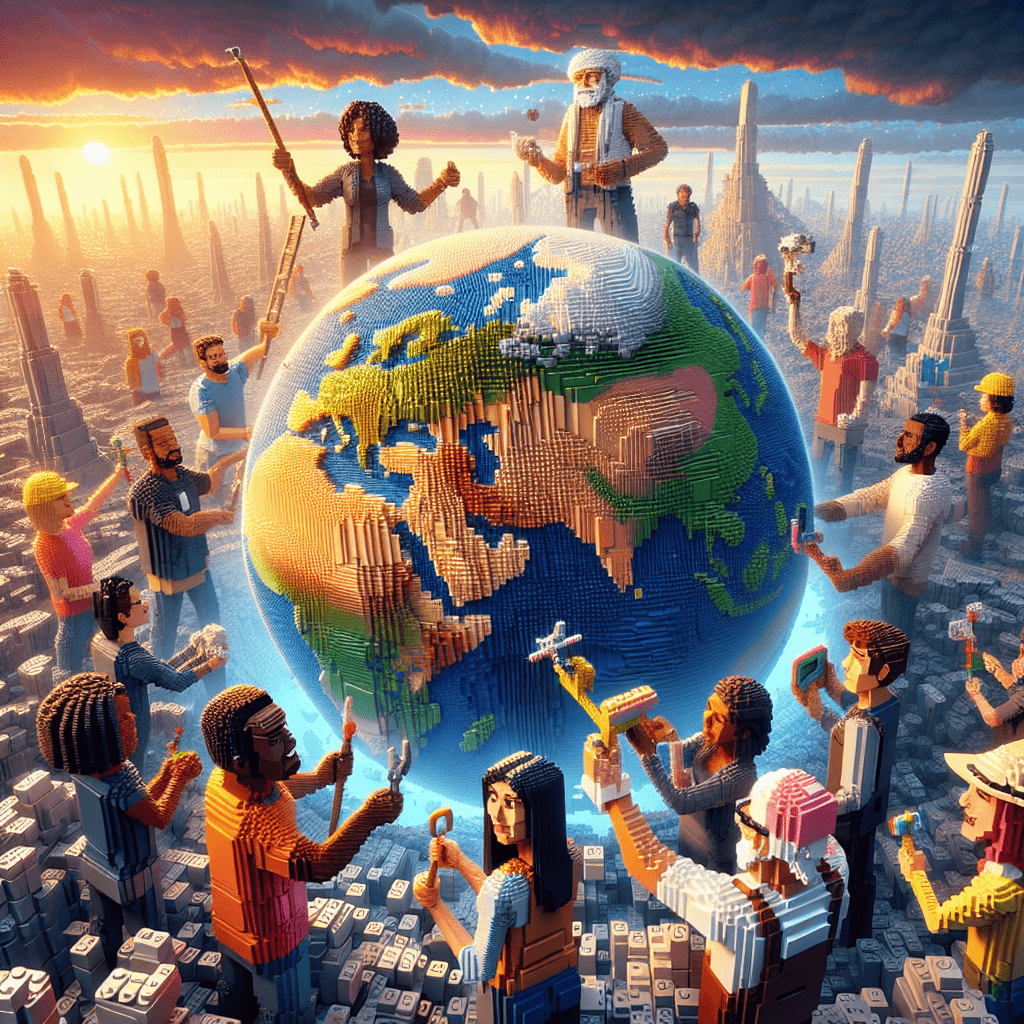
Inside the Quixotic Team Trying to Build an Entire World in a 20-Year-Old Game
In the pixelated expanse of Minecraft, a 20-year-old sandbox game launched in 2009, a dedicated collective known as Build the Earth pursues an audacious dream: recreating the entire planet at a 1:1 scale. This quixotic endeavor—tilting at the windmills of infinite block limits and computational reality—draws thousands of volunteers into a collaborative odyssey that’s as much about community as conquest.[5]
The Genesis of a Global Ambition
Build the Earth isn’t just a server; it’s a movement. Launched years ago, the project invites anyone to contribute by mapping real-world topography into Minecraft’s blocky terrain. Volunteers use satellite imagery, OSM data, and in-game tools to sculpt continents, cities, and coastlines pixel by pixel. By early 2026, significant chunks of Europe, North America, and parts of Asia stand rendered, with ongoing efforts in denser urban recreations like New York or Tokyo—echoing individual megaprojects but amplified globally.[5][2]
The team’s quixotic nature shines in its scale. Minecraft’s world height expanded dramatically in the 1.18 update, allowing skyscrapers like the Burj Khalifa replicas that pierce virtual skies, yet even that pales against rendering Earth’s 510 million square kilometers.[2][1] Participants divvy tasks: some tackle fantasy-inspired landmarks like pyramids or world trees for lore, others engineer dams and minecart railways for functionality, weaving infrastructure into the realism.[1][2]
Meet the Dreamers: Faces Behind the Blocks
At the core are passionate builders, many technical wizards who treat Minecraft like a canvas for civil engineering. YouTube realm tours reveal similar spirits—players crafting industrial districts, coastal villages, and Nether hubs in “forever worlds” that evolve over years.[3][4] Build the Earth’s admins coordinate via Discord, assigning regions to avoid overlap. One volunteer, featured in build idea compilations, spent months on a village in a tree, a microcosm of the project’s blend of whimsy and precision.[2]
These aren’t solo artists; they’re a global team battling glitches, griefers, and the game’s 32-bit coordinate limits (recently pushed in snapshots). “It’s chaos, but organized chaos,” notes a realm reviewer, highlighting crossing chaos builds where paths link farms, bases, and hubs—mirroring Build the Earth’s interconnected Earth.[3] Women, men, and teens from every continent log in, sharing tips on block palettes for modern cities or space stations in the End dimension for cosmic flair.[1]
Challenges in a Blocky Reality
The quixotism is palpable: a single real-world meter equals one block, demanding billions upon billions placed. Resource gathering in survival mode? Forgone for creative, yet custom plugins manage terabyte-scale worlds split across servers. Lag spikes during mega-builds like Statue of Liberty replicas test patience, and real-life commitments—jobs, studies—slow progress.[2][5]
Conflicts arise too. Purists debate fidelity: Should a fantasy tree pierce Manhattan, or stick to photorealism? Servers host pirate ships and wheat farms as palate cleansers amid the grind.[2] By 2026, with Minecraft’s ecosystem thriving on ideas like automatic farms and skyscraper cities, the team adapts, incorporating 1.21 copper blocks for aged statues or industrial grates.[2]
Yet perseverance defines them. Videos showcase “must-visit” spots: a brother’s base evolving into a main area, paths snaking through plains to villages—foreshadowing Earth’s highways.[4] It’s a 20-year game’s resilience matching its builders’.
Impact: Redefining Creativity in 2026
Beyond blocks, Build the Earth fosters lore-rich worlds. Dams hint at ancient engineering societies; spaceships in the End evoke exploration myths.[1] It inspires solo megaprojects—castles around which towns sprout, or pyramids in jungles—proving one person’s spark ignites collectives.[1]
In 2026, as Minecraft hits 300 million players, this team exemplifies enduring appeal. They’re not just building Earth; they’re terraforming community, one block at a time. Quixotic? Absolutely. But in a game where world height knows few bounds, their vision feels tantalizingly tangible.[2][5]
The project thrives on openness: join via their site, grab a shovel, and claim a plot. Whether crafting a minecart network across biomes or a world tree hub, contributors live the dream. Minecraft’s magic lies in such folly—turning “impossible” into “in progress.”
(Word count: 812)
Original source: Ars Technica – Inside the quixotic team trying to build an entire world in a 20-year-old game