NASA Satellite Data Aids Historic Return of Giant Tortoises to Galápagos After 150 Years
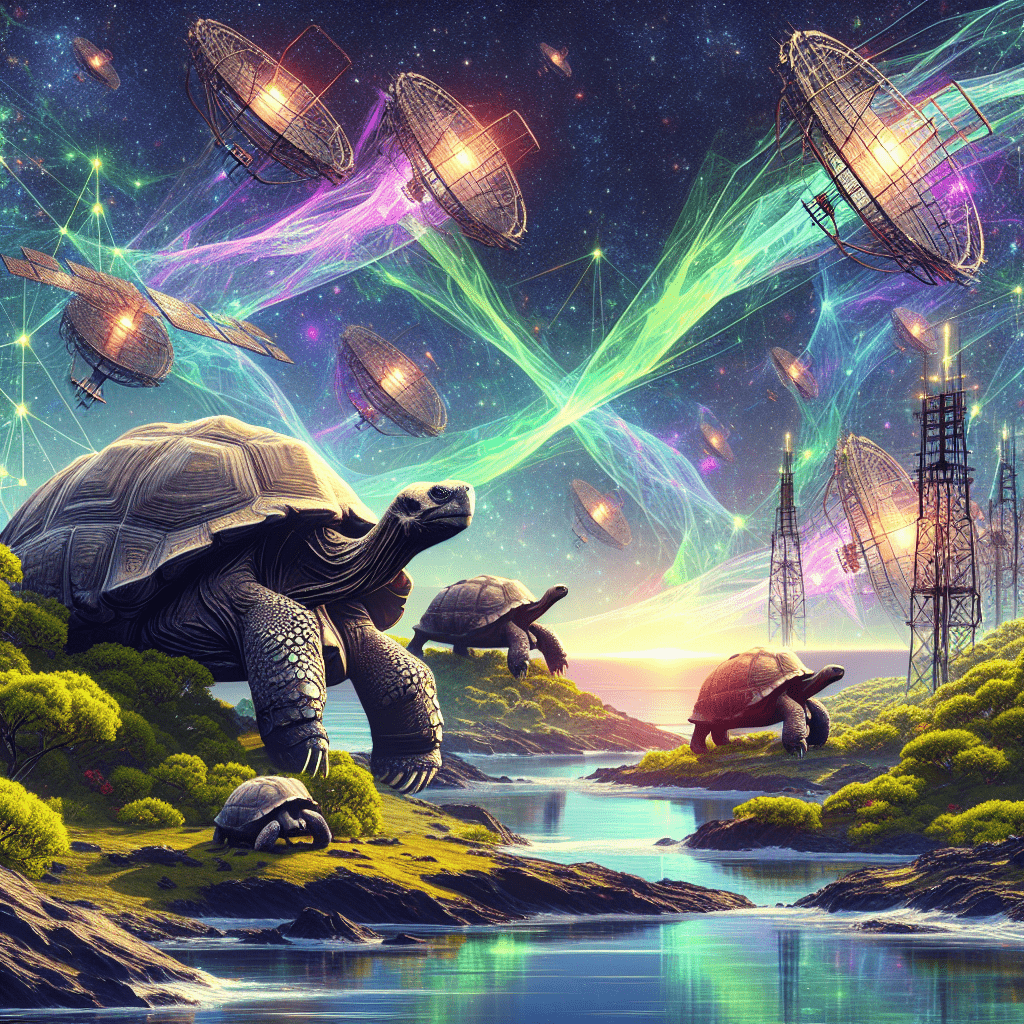
NASA Is Helping Bring Giant Tortoises Back to the Galápagos
For the first time in over 150 years, giant tortoises are roaming wild on Floreana Island in the Galápagos archipelago, thanks to a groundbreaking collaboration guided by NASA satellite data[1][2]. On February 20, conservation teams released 158 tortoises at two carefully selected sites, marking a pivotal step in restoring the island’s ecosystem[1][2][3].
A Historic Return After Centuries of Absence
Floreana Island, one of the Galápagos’ most ecologically unique spots, lost its giant tortoise population in the mid-1800s due to human activities like hunting and invasive species introduction[1][2][4]. Charles Darwin himself was among the last to observe them there during his famous voyage, making this reintroduction profoundly symbolic[1][2]. “It’s a huge deal to have these tortoises back on this island,” said James Gibbs, Vice President of Science and Conservation at Galápagos Conservancy and a co-principal investigator[1][2].
The Galápagos National Park Directorate, partnered with Galápagos Conservancy, leads this effort as part of the broader Floreana Ecological Restoration Project[1][2]. This initiative targets the eradication of invasives like rats and feral cats, paving the way for reintroducing 12 native species[1][2]. Giant tortoises act as keystone species, shaping the landscape by grazing vegetation, dispersing seeds, and maintaining ecological balance that defined the islands for millennia[1][2].
NASA’s High-Tech Role in Precision Placement
Releasing captive-bred tortoises into the wild poses challenges: they lack instincts for finding food, water, or nesting sites in unfamiliar terrain[1][2]. “If you can place them where conditions are already right, you give them a much better chance,” Gibbs explained[1][2][4].
Enter NASA Earth observations. Satellite data from sources like Landsat 8 maps vegetation, soil moisture, temperature, and climate shifts across the archipelago—key indicators of tortoise habitat[1][2]. For instance, a Landsat image from October 6, 2020, reveals Floreana’s dry coastal lowlands contrasting with greener, higher-elevation interiors ideal for tortoises[2].
Giorgos Mountrakis from the State University of New York College of Environmental Science and Forestry led the development of a decision tool integrating this NASA data with millions of field observations of tortoise locations[1][2]. The tool assesses current habitat suitability and forecasts conditions 20–40 years ahead, crucial since tortoises live over a century[1][2]. “The forecasting part is critical. We’re looking at where tortoises will succeed 20, 40 years from now,” Mountrakis emphasized[1][2].
High-resolution images from NASA’s Commercial Smallsat Data Acquisition Program further refine site evaluations before boots hit the ground[2]. Christian Sevilla, Director of Ecosystems at the Galápagos National Park Directorate, noted, “Habitat suitability models and environmental mapping are essential tools. They allow us to integrate climate, topography, and vegetation data to make evidence-based decisions. We move from intuition to precision”[2].
Galápagos’ diverse microclimates—cool, damp highlands trapping cloud moisture versus arid lowlands—demand such precision mapping[3]. This approach ensures releases target areas with reliable resources, boosting survival rates[1][2][3].
Beyond Floreana: A Blueprint for Archipelago-Wide Rewilding
Success on Floreana could revive a thriving tortoise population, reconnecting animals, plants, and soils in ancient patterns[1][2]. The Conservancy plans to apply the NASA-backed decision tool to other islands, supporting archipelago-wide reintroductions[1][2]. A recent presentation highlighted over 10,000 tortoises rewilded across the Galápagos in the past 60 years, underscoring the scale of these efforts[7].
Genetic considerations add complexity. Floreana’s original subspecies hybridized with others but persists through targeted breeding programs, ensuring authenticity[4]. NASA’s contributions extend this science-driven revival, blending space tech with on-the-ground conservation[1][2][4].
Why This Matters for Global Conservation
This project exemplifies how interdisciplinary collaboration—NASA’s orbital insights, field biology, and local expertise—tackles biodiversity loss[1][2]. Floreana’s restoration demonstrates large-scale ecological recovery is feasible with science and commitment. “For those of us who live and work in Galápagos, this is deeply meaningful,” Sevilla said. “It demonstrates that… with science and long-term commitment, we can recover an essential part of the archipelago’s natural heritage”[1].
As climate change alters habitats, tools like NASA’s predictive models become vital for long-lived species[1][2]. The Galápagos, Darwin’s living laboratory of evolution, now tests humanity’s ability to reverse extinction’s toll. Monitoring these 158 tortoises will reveal adaptation successes, informing global rewilding strategies from islands to mainland ecosystems.
In an era of environmental urgency, Floreana’s tortoises symbolize hope: technology and dedication can resurrect lost worlds. Stay tuned as these ancient giants reshape their island home, one deliberate step at a time.
(Word count: 812)
Original source: NASA – Breaking News – NASA Is Helping Bring Giant Tortoises Back to the Galápagos