NASA Aids Historic Return of Giant Tortoises to Galápagos Using Cutting-Edge Satellite Technology
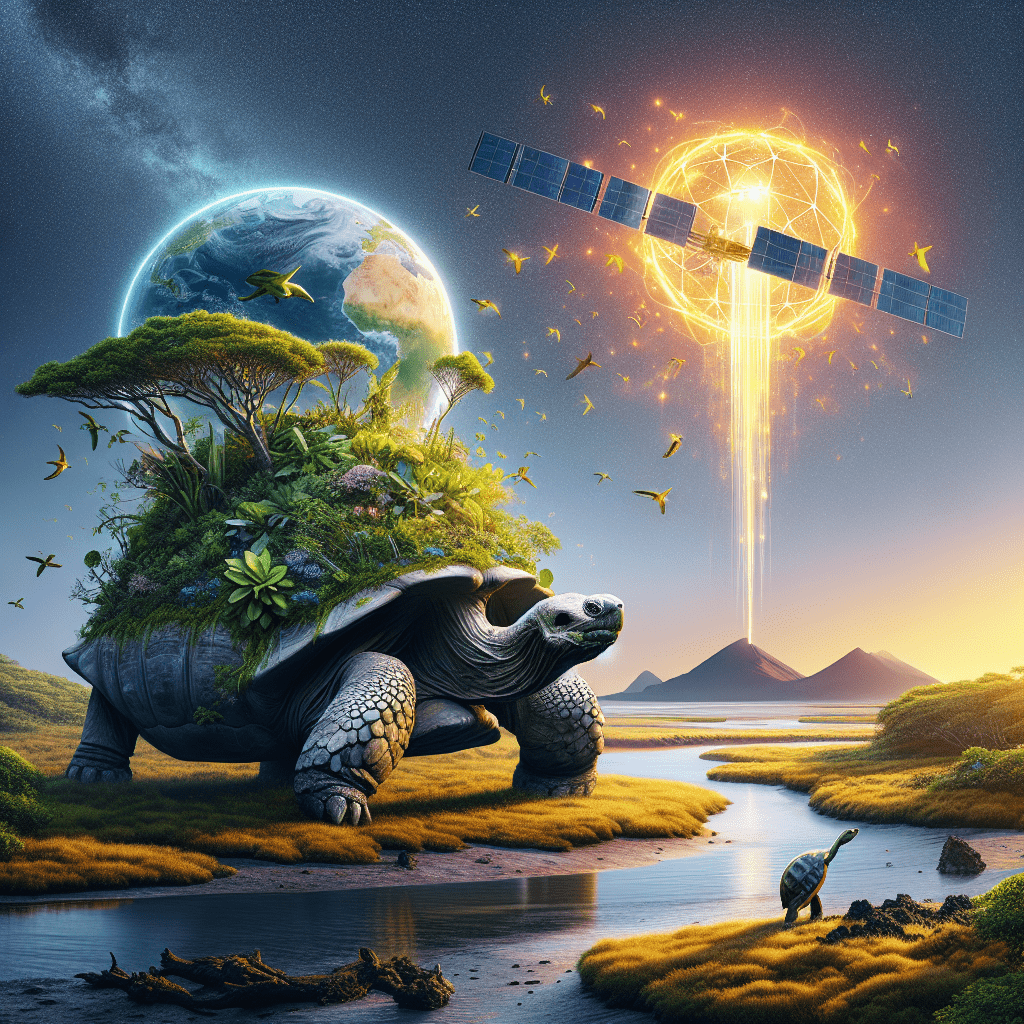
NASA Is Helping Bring Giant Tortoises Back to the Galápagos
The Galápagos Islands have long captured the imagination of scientists and nature enthusiasts alike. Charles Darwin’s legendary voyage to these volcanic islands shaped our understanding of evolution, and today, a groundbreaking conservation effort is restoring one of the archipelago’s most iconic species. On February 20, 2026, 158 giant tortoises returned to Floreana Island for the first time in more than 150 years, marking a historic milestone in ecological restoration guided by cutting-edge NASA satellite technology[1].
A Species Lost and Found
The story of the Floreana giant tortoise is one of tragedy and redemption. The subspecies, Chelonoidis niger niger, once thrived across the volcanic landscape of Floreana Island. However, beginning in the 1840s, whalers systematically hunted the tortoises to near extinction, removing thousands of animals to serve as a living food supply during long ocean voyages[2]. By the mid-1800s, the species had vanished from its native home, seemingly lost forever.
Yet nature—and dedicated scientists—had other plans. In 2000, researchers made an astonishing discovery on Wolf Volcano on Isabela Island, located approximately 180 kilometers from Floreana. They encountered unusual saddlebacked tortoises that didn’t match any known living subspecies[1]. When DNA analysis was later performed on bones found in caves and museum collections, scientists confirmed that these tortoises carried Floreana ancestry. Researchers believe whalers had inadvertently transported tortoises between islands more than a century earlier, preserving the genetic lineage in an unexpected location[1].
This discovery launched an ambitious breeding program. In 2015, park rangers and scientists returned to Wolf Volcano and identified 23 founding individuals—9 males and 14 females—with particularly pronounced Floreana genetics[3]. By 2022, the captive breeding center on Santa Cruz had produced 400 hatchlings, with the number growing to more than 600 by 2025[2]. These offspring, raised in the Galápagos National Park breeding facility, would eventually become the pioneers of Floreana’s restoration.
NASA Satellite Data: Precision Over Intuition
What makes this reintroduction truly innovative is the integration of NASA Earth observation technology into every decision about where and when to release the tortoises[1]. James Gibbs, Vice President of Science and Conservation for Galápagos Conservancy, explains the challenge: “It’s difficult for the tortoises because they get introduced from captivity into this environment. They don’t know where food is. They don’t know where water is. They don’t know where to nest.”[1]
Rather than relying on intuition, scientists used satellite data to map environmental conditions across the islands, tracking vegetation, moisture, and temperature patterns over time[1]. This information revealed the most suitable habitats for tortoise survival. Working with principal investigator Giorgos Mountrakis from the State University of New York College of Environmental Science and Forestry, the team built a decision tool combining satellite measurements with millions of field observations of tortoise locations across the archipelago[1].
Christian Sevilla, Director of Ecosystems at the Galápagos National Park Directorate, emphasized the shift this represents: “Habitat suitability models and environmental mapping are essential tools. They allow us to integrate climate, topography, and vegetation data to make evidence-based decisions. We move from intuition to precision.”[1]
Planning for Decades Ahead
One critical aspect of this project extends far beyond the present moment. Since giant tortoises can live more than a century, scientists aren’t just asking where the animals should be released today—they’re forecasting where conditions will be suitable 20, 40, or even 50 years from now[1]. “The forecasting part is critical,” Mountrakis notes. “This isn’t a one-year project. We’re looking at where tortoises will succeed 20, 40 years from now.”[1]
This long-term perspective reflects a fundamental shift in conservation strategy. Rather than viewing reintroduction as a single event, scientists recognize it as the beginning of a multi-generational commitment to ecosystem restoration.
The Larger Restoration Vision
The tortoise reintroduction is just the first step in the Floreana Ecological Restoration Project, an ambitious initiative to remove invasive species like rats and feral cats that devastated the island’s native fauna[1]. The tortoises serve as “ecosystem engineers”—seed dispersers, vegetation regulators, and promoters of natural habitat regeneration[4]. Once the island is secure, conservationists plan to reintroduce 12 native animal species, including the Floreana mockingbird, the Floreana racer snake, the vegetarian finch, and the little vermilion flycatcher[2].
Over the past 60 years, the Galápagos National Park Directorate has raised and released more than 10,000 giant tortoises across the archipelago, making this one of the largest rewilding efforts ever attempted[1]. The success on Floreana offers a blueprint for future reintroductions throughout the Galápagos.
A Triumph of Science and Commitment
The return of the Floreana giant tortoise represents far more than the reintroduction of a single species. It demonstrates that large-scale ecological restoration is possible when science, technology, and long-term commitment converge. As the tortoises take their first steps on volcanic soil their ancestors once roamed, they carry with them the hopes of an entire ecosystem—and a powerful reminder that even species brought to the brink of extinction can find their way home.
Original source: NASA – Breaking News – NASA Is Helping Bring Giant Tortoises Back to the Galápagos